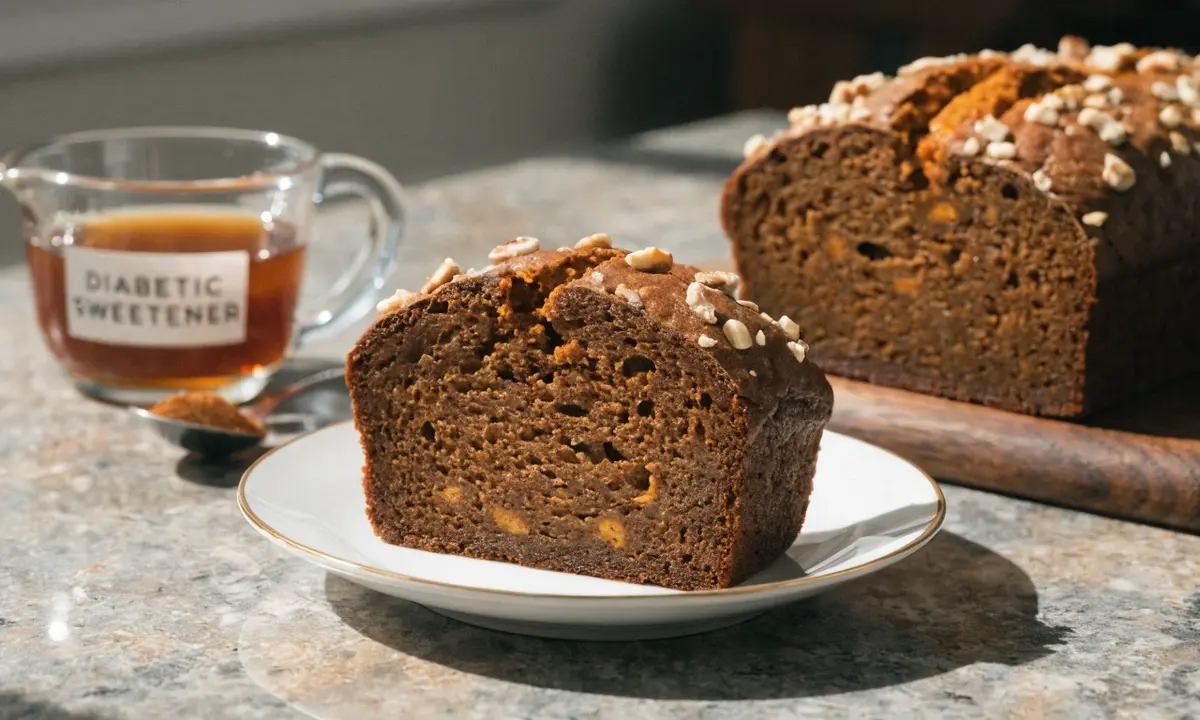
Diabetic Pumpkin Bread: 2 Recipes, Real Nutrition, No Blood Sugar Spike
Written and tested by Lylia. Nutritional estimates calculated using standard USDA ingredient data. This article is for general informational purposes only and is not medical or dietary advice. If you’re managing diabetes or another blood sugar condition, please talk with your doctor or a registered dietitian before making changes to your diet.
Every autumn, the same problem comes up for people with diabetes: everyone around you is baking pumpkin bread, and every version you find online is made with a cup of white sugar and two cups of white flour — somewhere between 25 and 35 grams of net carbs per slice, with a glycemic index north of 60.
This article gives you two recipes that actually solve the problem. The first is a low-carb almond flour pumpkin bread with 5g net carbs per slice — the one for people who want to stay strict with their blood sugar. The second is a whole wheat version for people who want something closer to traditional pumpkin bread but with meaningfully lower glycemic impact than the standard recipe. Both use real pumpkin purée, real warming spices, and no artificial ingredients.
Is Pumpkin Actually Good for Diabetics?
This is worth untangling carefully, because pumpkin’s numbers are often misreported. Plain pumpkin purée (not pumpkin pie filling, which has added sugar) actually has a high glycemic index — commonly measured around 64–75 depending on preparation, according to the International Tables of Glycemic Index. GI alone would suggest caution.
The reassuring number isn’t the GI — it’s the glycemic load, which accounts for how much digestible carbohydrate is actually in a real-world serving. Because pumpkin is mostly water and fiber, a typical half-cup serving contains only around 6g of net carbs, giving it a glycemic load of roughly 3 — solidly in the “low” category. In practical terms: pumpkin’s sugars are released quickly (high GI), but there simply isn’t much sugar in a normal serving to release (low GL), so the real-world blood sugar effect of a reasonable portion is modest. This is a genuinely important distinction — GI and glycemic load can point in different directions for the same food, and load is generally the more useful number for real meals.
A half-cup (120g) of plain canned pumpkin purée also provides meaningful amounts of vitamin A (from beta-carotene), potassium, and vitamin C. The problem with traditional pumpkin bread was never really the pumpkin — it’s the cup of white sugar and two cups of white flour that come with it.
The spices in pumpkin bread are worth a mention too. Cinnamon has been studied for a possible modest effect on insulin sensitivity and fasting blood sugar, though the evidence across studies is inconsistent enough that it shouldn’t be relied on for a measurable effect — it’s a reasonable, flavorful addition rather than a treatment.
Traditional vs. Diabetic-Friendly Pumpkin Bread: The Numbers
Here is what changes when you adapt the recipe for blood sugar management:
| Traditional pumpkin bread | This recipe (almond flour) | |
|---|---|---|
| Net carbs per slice | ~28g | ~5g |
| Glycemic index (est.) | ~65 — high | ~25 — low |
| Fiber per slice | ~1g | ~3g |
| Protein per slice | ~3g | ~6g |
| Sweetener | White sugar | Erythritol / monk fruit |
| Flour | All-purpose white flour | Almond flour |
The single biggest change is swapping white flour for almond flour. Almond flour has minimal digestible carbohydrate — it’s mostly fat and protein — which is why this one substitution has such a large effect on the finished bread’s carb count and estimated glycemic impact.
Recipe 1: Low-Carb Almond Flour Pumpkin Bread
This is the version to make if you’re actively managing your blood sugar day to day. At an estimated 5g net carbs per slice, a generous piece is unlikely to cause a large blood sugar response for most people — though as always, your own response may vary. The texture is denser and moister than white-flour pumpkin bread — more like a rich tea loaf than a light quick bread.
| Prep time | Cook time | Servings | Difficulty |
|---|---|---|---|
| 15 min | 55–60 min | 12 slices | Easy |
Ingredients
- 280g (2¾ cups) blanched almond flour — not almond meal, which is coarser and produces a grittier texture
- 2 tsp baking powder
- ½ tsp baking soda
- ½ tsp fine salt
- 2 tsp ground cinnamon
- 1 tsp ground ginger
- ½ tsp ground nutmeg
- ¼ tsp ground cloves
- ¼ tsp ground allspice
- 120g (½ cup) erythritol or monk fruit sweetener — granulated, not powdered
- 240g (1 cup) canned pumpkin purée — 100% pure pumpkin, NOT pumpkin pie filling
- 3 large eggs, room temperature
- 60ml (¼ cup) melted coconut oil or neutral avocado oil
- 1 tsp pure vanilla extract
- Optional: 60g (½ cup) chopped walnuts or pecans
- Optional: 1 tbsp pumpkin seeds (pepitas) to scatter on top
Method
- Preheat your oven to 165°C (325°F). Line a standard 23×13cm (9×5 inch) loaf pan with parchment paper, leaving an overhang on both long sides. Lightly grease the parchment.
- In a large bowl, whisk together the almond flour, baking powder, baking soda, salt, cinnamon, ginger, nutmeg, cloves, and allspice, breaking up any lumps.
- In a separate bowl, whisk together the erythritol, pumpkin purée, eggs, melted oil, and vanilla until smooth.
- Pour the wet ingredients into the dry. Fold with a rubber spatula until just combined — don’t overmix. Fold in chopped nuts if using.
- Transfer to the prepared pan, smooth the top, and scatter pumpkin seeds if using.
- Bake at 165°C for 55–60 minutes. Start checking at 50 minutes — the bread is done when a toothpick inserted in the center comes out with a few moist crumbs, not wet batter.
- Leave in the pan for 20 minutes, then lift out using the parchment overhang. Cool completely on a wire rack — at least 1 hour — before slicing. This step matters: almond flour breads are fragile when warm and crumble if cut too soon.
Baker’s tip: Almond flour browns faster than white flour due to its higher fat content. If the top darkens before the center sets, tent loosely with foil after 35 minutes.
Storage
- Room temperature: airtight container, up to 3 days.
- Refrigerator: up to 7 days.
- Freezer: slice, wrap individually, and freeze up to 3 months. Toast directly from frozen.
Estimated Nutrition (Per Slice, 1 of 12, Without Nuts)
These are calculated estimates, not lab-tested values.
| Nutrient | Per slice |
|---|---|
| Calories | ~195 |
| Total carbohydrates | ~8g |
| Fiber | ~3g |
| Net carbs | ~5g |
| Sugars (natural, from pumpkin) | ~2g |
| Sugar alcohols (erythritol) | ~3g |
| Protein | ~6g |
| Total fat | ~17g |
| Sodium | ~145mg |
| Glycemic index (estimated) | ~20–25 — low |
Recipe 2: Whole Wheat Pumpkin Bread (Lower GI, Higher Fiber)
This version is closer to traditional pumpkin bread — lighter, with a more open crumb — while still landing meaningfully lower in carbs and estimated glycemic impact than a standard recipe. Whole wheat flour generally has a lower GI than white flour, and combined with erythritol instead of sugar and Greek yogurt for moisture, this loaf comes in around 18g net carbs per slice.
| Prep time | Cook time | Servings | Difficulty |
|---|---|---|---|
| 15 min | 60–65 min | 12 slices | Easy |
Ingredients
- 200g (1⅔ cups) whole wheat flour — stoneground if available
- 80g (⅔ cup) plain almond flour
- 1½ tsp baking powder
- 1 tsp baking soda
- ½ tsp fine salt
- 1 tbsp ground cinnamon
- 1 tsp ground ginger
- ½ tsp ground nutmeg
- ¼ tsp ground allspice
- 150g (¾ cup) erythritol or golden erythritol
- 240g (1 cup) canned pumpkin purée
- 120g (½ cup) plain full-fat Greek yogurt
- 2 large eggs, room temperature
- 60ml (¼ cup) light olive oil or melted butter
- 1 tsp pure vanilla extract
- 60ml (¼ cup) unsweetened almond milk or regular milk
- Optional: 60g (½ cup) roughly chopped pecans
Method
- Preheat oven to 175°C (350°F). Grease and line a 23×13cm loaf pan with parchment.
- Whisk together both flours, baking powder, baking soda, salt, and spices in a large bowl.
- In a separate bowl, whisk together erythritol, pumpkin purée, Greek yogurt, eggs, olive oil, vanilla, and milk until smooth.
- Pour wet into dry, folding gently until just combined — don’t overmix.
- Fold in pecans if using. Let the batter rest 3 minutes.
- Pour into the prepared pan, smooth the top.
- Bake at 175°C for 60–65 minutes, until a toothpick comes out clean. Cover with foil after 40 minutes if browning too fast.
- Cool in the pan 15 minutes, then transfer to a wire rack for at least 45 minutes before slicing.
Baker’s tip: Greek yogurt’s acidity helps activate the baking soda for lift, and its protein content may help slow digestion of the surrounding carbohydrate somewhat. Don’t substitute with regular yogurt or sour cream without adjusting the baking soda.
Storage
- Room temperature: airtight container, up to 3 days.
- Refrigerator: up to 1 week.
- Freezer: slice and freeze up to 3 months.
Estimated Nutrition (Per Slice, 1 of 12, Without Pecans)
| Nutrient | Per slice |
|---|---|
| Calories | ~175 |
| Total carbohydrates | ~24g |
| Fiber | ~3.5g |
| Net carbs | ~18g |
| Sugars (natural) | ~3g |
| Sugar alcohols (erythritol) | ~2.5g |
| Protein | ~6g |
| Total fat | ~7g |
| Sodium | ~175mg |
| Glycemic index (estimated) | ~40 — medium-low |
Variations and Add-Ins
Pumpkin Cream Cheese Swirl (almond flour version only)
Beat 115g (4 oz) softened full-fat cream cheese with 2 tablespoons powdered erythritol and 1 teaspoon vanilla until smooth. Layer half the batter, spoon the cream cheese mixture down the center, top with remaining batter, and swirl gently with a skewer. Bake as directed, adding 5 extra minutes. Adds roughly 1.5g net carbs per slice.
Chocolate Chip Pumpkin Bread
Add 85g (½ cup) sugar-free dark chocolate chips (72% cacao or higher) to either recipe. This adds roughly 1g net carbs per slice. Dark chocolate does contain flavonoids that have been studied for potential cardiovascular and metabolic benefits, though the evidence for a meaningful insulin-sensitivity effect from the small amount in a slice of bread is limited — enjoy it for flavor rather than expecting a measurable benefit.
Pumpkin Bread Muffins
Either batter works in a lined 12-hole muffin tin, filled two-thirds full. Bake the almond flour version at 165°C for 22–25 minutes, the whole wheat version at 175°C for 20–22 minutes.
How to Serve Pumpkin Bread to Help Keep Blood Sugar Steadier
Pairing even a low-carb slice with protein or fat may help moderate the blood sugar response further:
- Almond butter (1 tbsp) — adds protein and healthy fat
- Full-fat cream cheese (1 tbsp) — minimal added carbs
- A boiled or poached egg alongside
- Plain Greek yogurt with a few blueberries
Pairing with orange juice, sweetened coffee drinks, or jam will add meaningfully more carbohydrate on top of the bread itself, worth keeping in mind if you’re tracking closely.
Common Questions
Can I use fresh pumpkin instead of canned?
Yes. Roast a sugar pumpkin or butternut squash, scoop and blend until smooth, and measure 240g (1 cup). If it seems watery, drain through a fine mesh sieve or clean cloth for 30 minutes first.
Why does my almond flour pumpkin bread sink in the middle?
Usually underbaking (test with a toothpick in the very center, not the edge) or opening the oven door too early — almond flour batters are more sensitive to temperature swings than wheat-flour batters.
Can I make this without eggs?
For either recipe, a flax egg (1 tablespoon ground flaxseed + 3 tablespoons water, rested 5 minutes) can replace each egg, though the texture will be denser. Eggs do real structural work here and can’t be fully skipped.
Will erythritol work the same as sugar?
Mostly, with two caveats: it won’t caramelize the crust the way sugar does, and it can leave a mild cooling sensation when the bread is cool (which mostly disappears when warm or toasted). A monk fruit/erythritol blend has a cleaner taste if that bothers you.
Can I use maple syrup or honey instead of erythritol?
You can, but it meaningfully raises the net carbs and glycemic impact. A full cup of maple syrup adds roughly 16g extra net carbs per slice; 3–4 tablespoons adds a more modest ~4g extra net carbs per slice while still landing well below a standard recipe.
Is pumpkin bread suitable for Type 1 diabetes?
Both recipes can work for type 1 diabetes, but dosing insulin for fat-heavy, lower-carb baked goods like the almond flour version can be more complex than for a standard carb count. Research on protein and fat intake in type 1 diabetes has found that larger amounts eaten together can cause a delayed blood glucose rise 2–5 hours later, separate from a typical carb-driven spike. Some people on intensive insulin therapy use a split or extended bolus for meals like this — worth testing your own response and discussing insulin timing with your care team.
Sources & Further Reading
- Pumpkin Glycemic Index and Glycemic Load – NatureWord
- Mayo Clinic – Diabetes Treatment: Can Cinnamon Lower Blood Sugar?
- Paterson et al., “Influence of Dietary Protein on Postprandial Blood Glucose Levels in Individuals with Type 1 Diabetes” – Diabetic Medicine
- USDA FoodData Central – general reference basis for nutrition estimates
Medical disclaimer: The nutritional information in this article is estimated using standard food composition data and may vary depending on specific brands used. This article is for educational purposes and does not constitute medical advice. People with diabetes should consult a registered dietitian or healthcare provider before making significant dietary changes. Always monitor your blood glucose when trying new foods.