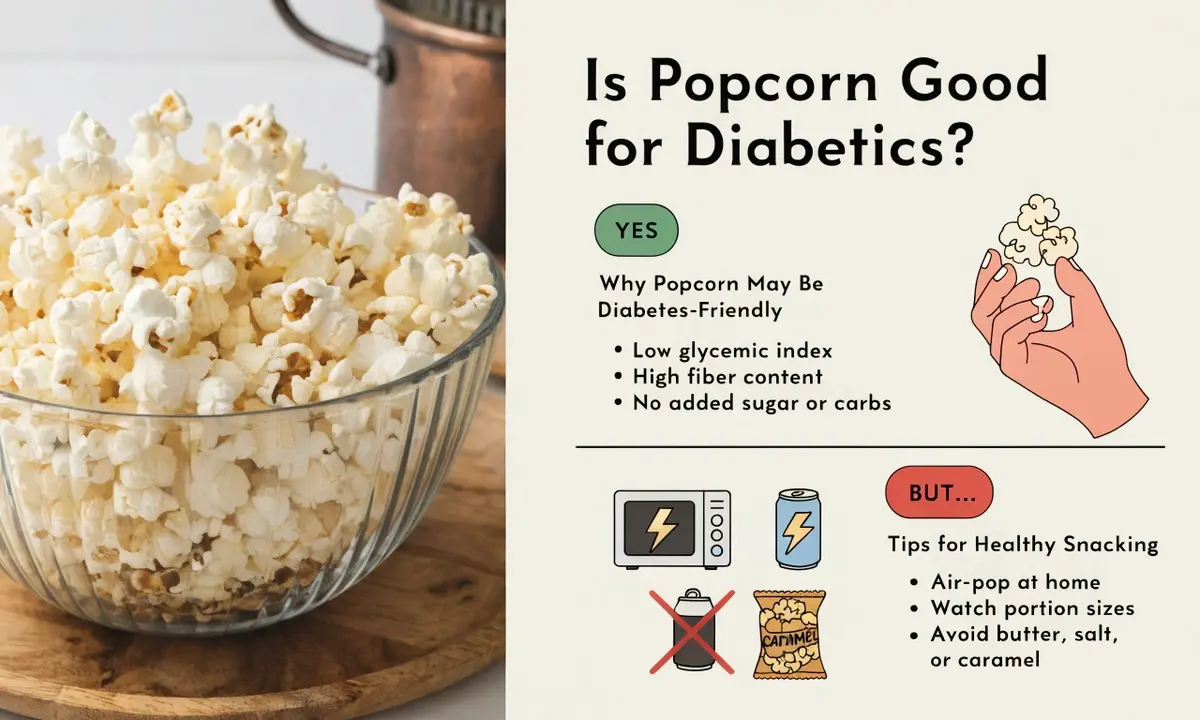
Is Popcorn Good for Diabetics? A Complete Guide
Written and tested by Lylia. Nutritional estimates calculated using standard USDA ingredient data. This article is for general informational purposes only and is not medical or dietary advice. If you’re managing diabetes or another blood sugar condition, please talk with your doctor or a registered dietitian before making changes to your diet.
For many people, popcorn is the go-to snack for movie nights or a quick bite. But if you’re managing diabetes, it’s worth asking whether it’s actually a safe choice. Here’s what the evidence says.
Key Takeaways
- Popcorn can be a reasonable snack choice for many people with diabetes, in moderation
- Air-popped, unsweetened popcorn has a low-to-moderate glycemic index
- Portion size and preparation method matter more than the popcorn itself
The Nutritional Profile of Popcorn
For a typical 3-cup serving of plain, air-popped popcorn:
- Carbohydrates: ~18–20g
- Fiber: ~3–6g
- Protein: ~3g
- Fat: ~1–2g (air-popped, no added oil)
- Calories: ~90–100
Why Popcorn Can Fit a Diabetes-Friendly Diet
- Low-to-moderate glycemic index. Plain, air-popped popcorn has a glycemic index generally cited in the 55 range, putting it at the low end of the moderate category — multiple sources place it around 55, with some variation (up to roughly 65) depending on preparation and brand. This means it’s less likely to cause a rapid blood sugar spike than many processed snacks.
- High in fiber relative to its carb count. Fiber slows carbohydrate absorption, which generally supports a more gradual rise in blood sugar rather than a sharp spike.
- Whole grain. Popcorn is a whole grain, which generally offers more fiber and nutrients than refined-grain snack foods.
- Good volume for the calories. A satisfying-sized portion (2–3 cups) comes in relatively low in calories and carbs compared to many packaged snacks.
Potential Concerns
- Portion control still matters. Popcorn‘s fiber and moderate GI help, but eating a large amount still adds up in total carbohydrate — stick to a measured portion rather than eating from the bag or bowl indefinitely.
- Toppings matter a lot. Butter, caramel, and sugary coatings can turn a reasonably diabetes-friendly snack into one that isn’t.
- Microwave varieties vary widely. Many pre-packaged microwave popcorns add fats, sodium, and sometimes sugar — some brands are reasonable, but it’s worth checking the label rather than assuming.
How to Enjoy Popcorn Safely
- Choose air-popped. Use an air popper, or stovetop-pop with a minimal amount of oil.
- Measure your portions. Use a measuring cup rather than eating straight from a large bowl or bag.
- Flavor without sugar. Herbs, spices, nutritional yeast, or a small amount of grated parmesan add flavor without added carbs.
- Pair with protein. A small handful of nuts or a cheese stick alongside popcorn can help moderate the overall blood sugar response of the snack.
- Check your own response. Testing your blood glucose before and after eating popcorn is the most reliable way to know how it specifically affects you.
What the Research and Major Health Organizations Say
The American Diabetes Association generally supports whole grains as part of a healthy eating pattern for people with diabetes, while emphasizing portion control and overall carbohydrate counting rather than treating any single food as automatically “safe” or “unsafe.” Medical News Today’s review of the research similarly frames plain, air-popped popcorn as a reasonable lower-GI snack option, while cautioning that many commercial popcorn products are ultra-processed with added salt, butter, or sugar that changes the picture significantly.
Frequently Asked Questions
Can diabetics eat popcorn every day?
Popcorn can fit into a varied diet, but as with most single foods, it’s generally better to rotate your snacks rather than rely on the same one daily. Check with your healthcare provider or dietitian for guidance specific to your carb budget.
Is microwave popcorn safe for diabetics?
It depends on the brand — some are reasonable, but many contain added fats and sodium, and occasionally sugar. Checking the nutrition label is more reliable than assuming based on packaging claims. Air-popped or homemade stovetop popcorn with minimal oil is generally the safer default.
How much popcorn can someone with diabetes eat?
A typical serving is about 2–3 cups of popped corn (roughly 15–20g of carbohydrate), but individual carb budgets vary — check with your healthcare provider for guidance specific to you.
Does popcorn raise blood sugar?
Plain popcorn has a relatively low-to-moderate glycemic index, so it’s less likely to cause a sharp spike than many processed snacks — but it still contains carbohydrate, and individual responses vary. Monitoring your own blood sugar response is the most reliable way to know how it affects you.
What’s the best way to prepare popcorn if you have diabetes?
Air-popping, or stovetop-popping with minimal oil, while avoiding sugary or heavily buttered toppings, is generally the best approach for blood sugar management.
Conclusion
In moderation and prepared simply, popcorn can be a reasonable snack option for many people with diabetes. Its fiber content, moderate glycemic index, and whole-grain status make it a comparatively smart choice next to many other packaged snack foods.
As with any food, individual responses vary — checking your own blood glucose response, and talking with your doctor or a registered dietitian about how popcorn fits your specific plan, is the best way to know for sure.
Sources & Further Reading
- Medical News Today – Diabetes and Popcorn: Glycemic Index, Shopping Tips, and Nutrition
- American Diabetes Association – Understanding Carbohydrates
- USDA FoodData Central – general reference basis for nutrition estimates
Disclaimer: This article is for general informational purposes only and has not been evaluated by a medical professional. It is not a substitute for personalized medical or dietary advice. Please consult your doctor or a registered dietitian regarding any health condition, including diabetes.