
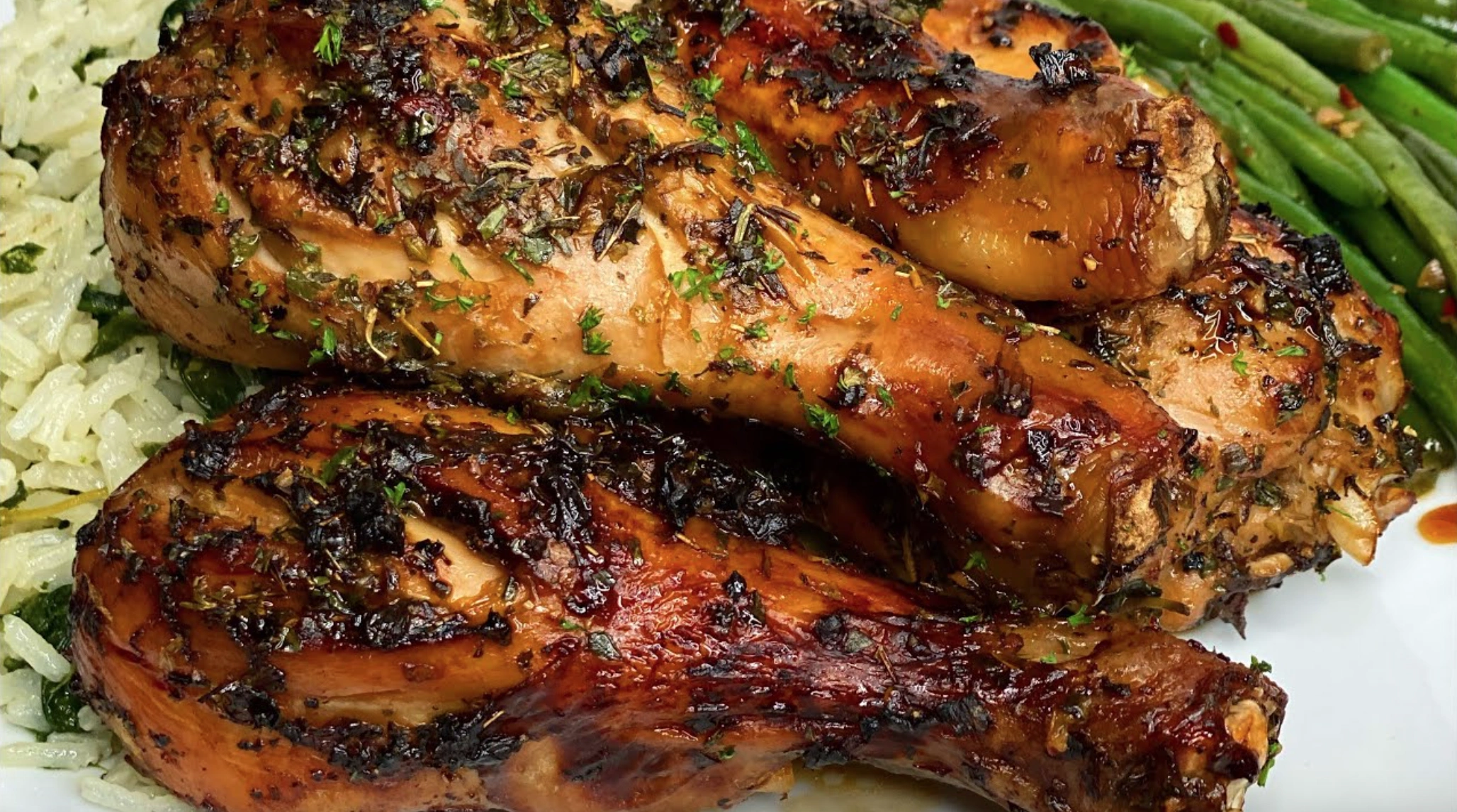
Garlic Herb Baked Chicken: A Diabetic-Friendly Dinner
Written and tested by Lylia , home cook and recipe developer. Nutritional estimates calculated using standard USDA ingredient data. This article is for general informational purposes only and is not medical or dietary advice. If you’re managing diabetes or another blood sugar condition, please talk with your doctor or a registered dietitian before making changes to your diet.
This garlic herb baked chicken is a straightforward, high-protein dinner for anyone watching their carb intake. Tender chicken breasts seasoned with garlic and herbs bake up in about 35 minutes with minimal prep, and the estimated 0g of carbohydrate per serving makes it easy to build a meal around.
Recipe Details
| Prep Time | 10 minutes |
| Cook Time | 22–25 minutes |
| Total Time | 35 minutes |
| Servings | 4 |
| Difficulty | Easy |
Estimated Nutrition (Per Serving)
These are calculated estimates based on typical ingredient values, not lab-tested measurements. Actual values will vary slightly based on chicken breast size and exact seasoning amounts.
| Nutrient | Amount |
|---|---|
| Calories | ~195 |
| Carbohydrates | ~0g |
| Protein | ~35g |
| Fat | ~6g |
| Fiber | ~0g |
| Sodium | ~320mg |
Ingredients
For the Chicken
- 4 boneless, skinless chicken breasts (6 oz each, about 1.5 lbs total)
- 2 tablespoons (30ml) olive oil
- 1 teaspoon sea salt
- ½ teaspoon black pepper
For the Garlic Herb Seasoning
- 4 cloves garlic, minced (or 1 tablespoon garlic powder)
- 1 tablespoon fresh rosemary, finely chopped (or 1 tsp dried)
- 1 tablespoon fresh thyme leaves (or 1 tsp dried)
- 1 tablespoon fresh parsley, chopped (or 1 tsp dried)
- 1 teaspoon Italian seasoning
- ½ teaspoon paprika (for color)
- ¼ teaspoon red pepper flakes (optional, for heat)
For Extra Flavor (Optional)
- 2 tablespoons (30g) unsalted butter, melted
- 1 tablespoon fresh lemon juice
- Lemon wedges for serving
- Fresh parsley for garnish
Equipment Needed
- Large baking dish (9×13 inch) or rimmed baking sheet
- Meat thermometer
- Small mixing bowl
- Sharp knife
Instructions
1. Prep the oven and chicken. Preheat your oven to 400°F (200°C). Pat the chicken breasts dry with paper towels — this helps them brown better. If any breasts are thicker than 1 inch, pound them to an even thickness with a meat mallet so they cook evenly.
2. Make the herb seasoning. In a small bowl, combine the garlic, rosemary, thyme, parsley, Italian seasoning, paprika, and red pepper flakes (if using).
3. Season the chicken. Place the chicken in the baking dish. Drizzle with olive oil and rub to coat all sides. Sprinkle the herb mixture generously over both sides, pressing gently so it adheres.
4. Add the butter mixture (optional). If using, whisk the melted butter with lemon juice and drizzle over the seasoned chicken.
5. Bake. Bake for 22–25 minutes, or until a meat thermometer inserted at the thickest part reads 165°F (74°C).
6. Rest. Let the chicken rest for 5 minutes before slicing — this keeps the juices in the meat rather than on the cutting board.
7. Serve. Slice on the diagonal, serve with lemon wedges, and drizzle any pan juices over the top if you like.
Tips From Testing This Recipe
- Don’t skip the thermometer. Chicken is safely done at 165°F internal temperature; cooking past that dries it out. A basic meat thermometer makes a real difference here.
- Marinate for more flavor. If you have time, marinate the chicken in the olive oil, herbs, and lemon juice for 2–4 hours before baking.
- Budget swap: Bone-in, skin-on chicken thighs work well in this recipe and are often cheaper. Add about 10 minutes to the cooking time and check with a thermometer rather than going by time alone.
- Meal prep: This scales up easily — make a few batches, portion with different low-carb sides, and reheat through the week.
- Rest it. Skipping the 5-minute rest after baking is the most common reason chicken turns out dry; the juices need time to redistribute.
Is This a Good Choice for People Managing Diabetes?
| Estimated carbs per serving | ~0g |
| Protein per serving | ~35g |
Plain chicken breast has essentially no carbohydrate, which is one reason it’s a common building block in lower-carb and diabetes meal planning. That said, “zero carbs” doesn’t automatically mean “zero effect on blood sugar for everyone” — the reality is more nuanced than that:
- Large amounts of protein can raise blood glucose hours later, especially in type 1 diabetes. Research in Diabetic Medicine found that consuming 75g or more of protein in one sitting caused a delayed, sustained rise in blood glucose 3–5 hours later in people with type 1 diabetes on intensive insulin therapy — likely due to the liver converting some amino acids to glucose (gluconeogenesis). A 2025 review in Diabetes Care confirms this pattern and notes it’s a reason some people on intensive insulin therapy are advised to consider extended or dual-wave insulin boluses for high-protein meals.
- A single 6 oz serving of this chicken (about 35g protein) is below the ~75g threshold where these studies observed a measurable effect, so it’s less likely to be a concern on its own — but if you’re eating a larger portion, doubling up servings, or combining this with other protein-heavy foods in the same meal, the total protein load is worth factoring into your own monitoring, particularly if you use insulin.
- This effect is not the same as a carbohydrate-driven blood sugar spike — it’s typically smaller, slower, and delayed by hours rather than the faster rise seen after eating carbohydrate.
If you use insulin or another glucose-lowering medication, it’s worth discussing high-protein meals like this with your care team, since individual dosing strategies vary. If you don’t use insulin, checking your own blood glucose response to a new meal is still the most reliable way to understand your personal pattern.
Variations
Mediterranean Style
Add ½ cup sliced Kalamata olives, ½ cup halved cherry tomatoes, 2 oz crumbled feta, and 1 teaspoon dried oregano. (Adds a few grams of carbohydrate — check your own totals if you’re tracking closely.)
Mexican-Inspired
Replace the herb blend with chili powder, cumin, smoked paprika, and a pinch of cayenne. Top with fresh cilantro and lime.
Asian-Fusion
Use coconut aminos in place of soy sauce, with grated ginger, garlic, and a touch of sesame oil. Garnish with scallions and sesame seeds.
Creamy Mushroom Chicken
Add sautéed mushrooms, a splash of heavy cream, and a little cream cheese during the last 10 minutes of baking. (Adds a modest amount of carbohydrate and fat.)
Lemon Pepper Style
Replace the herb blend with lemon zest, cracked black pepper, and garlic powder; finish with fresh lemon juice.
Serving Suggestions
Pairing this chicken with non-starchy vegetables is a straightforward way to build a lower-carb plate, in line with the American Diabetes Association’s Diabetes Plate approach:
- Roasted broccoli with parmesan and cauliflower mash
- Greek salad with feta and zucchini noodles
- Roasted Brussels sprouts, with a small, portion-controlled starch like sweet potato if your carb budget allows
- Sliced over mixed greens with avocado, cherry tomatoes, and cucumber for a lunch salad
Exact carb totals will depend on your specific portions and ingredients — worth calculating your own if you’re tracking closely, rather than relying on someone else’s estimate.
Frequently Asked Questions
Can I use chicken thighs instead of breasts? Yes. Boneless, skinless thighs are more forgiving and harder to overcook. Increase the cooking time to about 28–30 minutes, and check with a thermometer. Fat content will be somewhat higher than with breast meat.
Is this recipe keto-friendly? With an estimated 0g net carbs and a solid protein-to-fat ratio, it fits easily into most ketogenic meal plans.
How do I know when chicken is done without a thermometer? Cut into the thickest part — the juices should run clear and the meat should be opaque throughout. That said, a thermometer is the only reliable way to confirm the food-safe internal temperature of 165°F; visual cues alone can be misleading.
Can I cook this in an air fryer? Yes — air fry at 380°F for 15–18 minutes, flipping halfway through, checking internal temperature with a thermometer.
Will this spike my blood sugar? Plain chicken breast has essentially no carbohydrate, so it’s unlikely to cause the kind of rapid blood sugar spike associated with carbohydrate-heavy foods. Very large protein portions can still cause a smaller, delayed rise several hours later in some people, particularly with type 1 diabetes — see the section above for more detail. What you serve it with matters too, so consider your sides as part of the total picture.
Can I freeze cooked chicken? Yes. Freeze individual portions in airtight containers or freezer bags for up to 3 months. Thaw overnight in the refrigerator and reheat gently.
Can diabetics eat chicken skin? Skin adds saturated fat and calories but doesn’t meaningfully affect carbohydrate content or blood sugar directly. Skinless is a leaner choice; skin-on is a matter of personal preference for fat intake.
Storage Instructions
- Refrigerator: Airtight container for up to 4 days.
- Freezer: Wrap portions tightly and freeze in labeled bags for up to 3 months.
- Reheating: Microwave (covered, 70% power), oven at 350°F covered with foil, stovetop in a little olive oil, or air fryer at 360°F for the crispest texture. Reheat to an internal temperature of 165°F.
Recipe Notes
- Larger breasts (8+ oz) will need roughly 5–7 more minutes of cooking time — check with a thermometer rather than estimating.
- Brining in a simple salt-water solution for 30 minutes before cooking can add extra juiciness; rinse and pat dry afterward.
- Fresh herbs give a brighter flavor; dried herbs are more concentrated, so use less if substituting the other direction.
- Pan juices are worth saving and drizzling over vegetables or cauliflower rice.
A Closer Look at the Ingredients
- Garlic: Some research suggests garlic may have a modest effect on fasting blood sugar and insulin sensitivity, though results across studies are mixed and effect sizes are generally small — it’s reasonable to enjoy it for flavor without expecting it to meaningfully offset dietary choices elsewhere.
- Rosemary and thyme: Both contain antioxidant compounds; general health benefits are reasonably well supported, though not specific, clinically proven blood-sugar effects.
- Olive oil: The monounsaturated fat in olive oil is a component of dietary patterns like the Mediterranean diet that are associated with better metabolic health outcomes in population studies — it’s one piece of an overall pattern rather than something to expect a standalone effect from in a single meal.
Sample Weekly Meal Prep (Illustrative Only)
This is one example of how this chicken might fit into a week of meals — your own targets, medication, and preferences should guide your actual carb counts rather than this example.
Sunday prep: Make a few batches of chicken, roast a couple of vegetables, and prepare a batch of cauliflower rice.
Through the week: Pair one portion of chicken with a different vegetable or side each day to keep meals varied.
Related Recipes You Might Like
Sources & Further Reading
- Paterson et al., “Influence of dietary protein on postprandial blood glucose levels in individuals with Type 1 diabetes” – Diabetic Medicine
- The Glycemic Impact of Protein Ingestion in People With Type 1 Diabetes – Diabetes Care (American Diabetes Association)
- American Diabetes Association – The Diabetes Plate
- USDA FoodData Central – general reference basis for nutrition estimates
Disclaimer: This recipe and its nutritional estimates are provided for general informational purposes and have not been evaluated by a medical professional or laboratory-tested. They are not a substitute for personalized medical or dietary advice. Please consult your doctor or a registered dietitian regarding any health condition, including diabetes, especially if you use insulin or other glucose-lowering medication.