The Best Cauliflower Rice Recipes for a Diabetes-Friendly Diet
Written and tested by Lylia , home cook and recipe developer. Nutritional estimates calculated using standard USDA ingredient data. This article is for general informational purposes only and is not medical or dietary advice. If you’re managing diabetes or another blood sugar condition, please talk with your doctor or a registered dietitian before making changes to your diet.
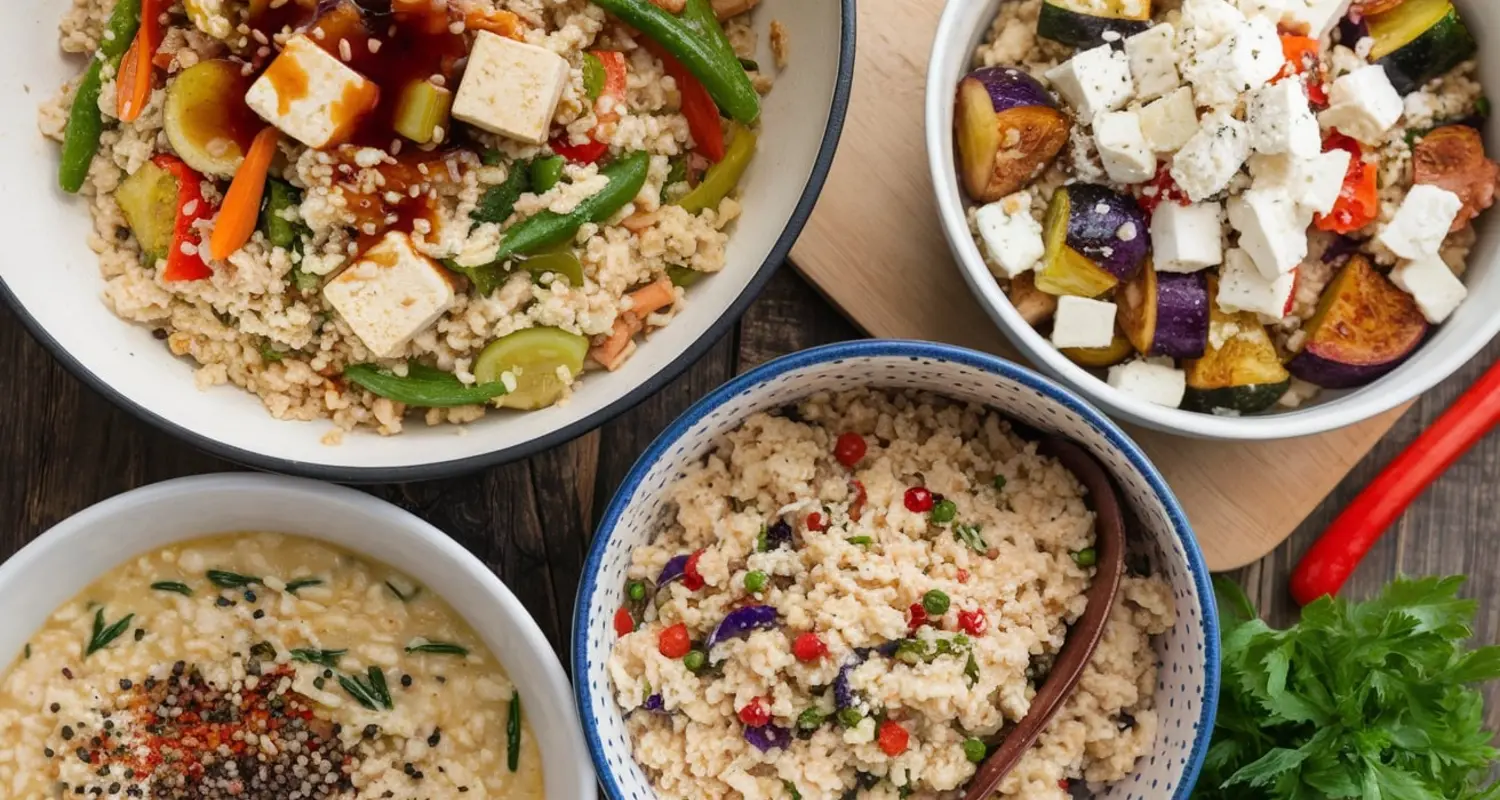
Cauliflower rice has become a go-to low-carb substitute for anyone watching their carbohydrate intake — and unlike a lot of “rice alternatives,” it actually holds up in real cooking. Below: how to make it at home, why it works well for lower-carb eating, and five real recipes that use it, from a quick weeknight stir-fry to a Mediterranean-style tabbouleh.
What Is Cauliflower Rice, and Why Use It?
Cauliflower rice is simply cauliflower that’s been pulsed or grated down to a rice-like texture. It takes on the flavor of whatever it’s cooked with, and its neutral, slightly nutty taste works in a wide range of dishes.
Nutritionally, the appeal is straightforward: a cup of raw cauliflower rice has roughly 5g of carbohydrate, compared to around 45g in a cup of cooked white rice — a meaningful difference if you’re tracking carbs closely. It also contributes vitamin C, vitamin K, folate, and fiber.
A note on glycemic index claims: You’ll often see cauliflower rice assigned a specific glycemic index number online (commonly cited as 10–15). Worth knowing: standard glycemic index testing requires a food to contain enough digestible carbohydrate (typically 50g) to measure a blood sugar response, and a normal serving of cauliflower doesn’t contain nearly that much — so it isn’t part of the standard tested GI databases the way rice, bread, or potatoes are.
The practical takeaway that matters is simpler and well-supported: cauliflower rice is very low in digestible carbohydrate and high in fiber, so it has a much smaller effect on blood sugar than a starchy grain like white rice. Treat the specific number you see cited online as an estimate, not a lab-measured fact.
How to Make Cauliflower Rice at Home
- Cut a head of cauliflower into florets and pulse in a food processor in batches until it reaches a rice-like texture — don’t over-process, or it turns mushy.
- No food processor? A box grater works fine for smaller batches.
- For a drier texture (helpful in stir-fries and fried rice), wrap the riced cauliflower in a clean towel or cheesecloth and squeeze out excess moisture before cooking.
- Sauté in a hot, lightly oiled pan for 4–6 minutes, or steam for 3–4 minutes if you want a softer texture.
Storage: Keeps in an airtight container in the fridge for up to 5 days, or in the freezer for up to 3 months. It’s a good candidate for batch cooking at the start of the week.
5 Recipes Using Cauliflower Rice
1. Cauliflower Rice Stir-Fry
What you’ll need: 4 cups riced cauliflower, 1 tablespoon sesame or olive oil, 1 cup mixed diced vegetables (bell pepper, carrot, snap peas), 2 cloves garlic (minced), 1 tablespoon low-sodium soy sauce, 1 egg (optional, scrambled in), scallions to garnish. How to make it: Heat the oil in a large skillet or wok over medium-high heat. Add garlic and vegetables, and cook 3–4 minutes until just tender. Push to the side, scramble the egg in the empty space if using, then add the riced cauliflower. Stir-fry for 4–5 minutes until just tender (don’t overcook, or it turns watery). Stir in soy sauce, top with scallions. Estimated carbs: ~8g per 1-cup serving, depending on vegetables used.
2. Cauliflower Rice Tabbouleh
What you’ll need: 3 cups riced cauliflower (raw or very lightly steamed), 1 cup chopped parsley, ¼ cup chopped mint, 2 tomatoes (diced), ½ cucumber (diced), 3 tablespoons olive oil, juice of 2 lemons, salt and pepper to taste. How to make it: Combine all ingredients in a large bowl and toss well. Chill for at least 20 minutes before serving to let the flavors meld. Estimated carbs: ~6g per 1-cup serving.
3. Cauliflower Rice and Black Bean Burrito Bowl
What you’ll need: 2 cups riced cauliflower (sautéed), ½ cup black beans, ½ cup diced tomatoes, ¼ cup diced avocado, 2 tablespoons chopped cilantro, lime wedges, salsa and Greek yogurt to top. How to make it: Sauté the riced cauliflower, then layer into bowls with black beans, tomatoes, and avocado. Top with cilantro, a squeeze of lime, salsa, and a spoonful of Greek yogurt in place of sour cream. Estimated carbs: ~18g per bowl, mostly from the black beans — a good source of fiber, but worth counting if you’re tracking closely.
4. Cauliflower Fried “Rice”
What you’ll need: 4 cups riced cauliflower, 1 tablespoon sesame oil, ½ cup diced onion, ½ cup frozen peas and carrots, 2 eggs (scrambled in), 2 tablespoons low-sodium soy sauce, 1 teaspoon grated ginger, scallions to garnish. How to make it: Sauté onion in the oil until soft, add peas and carrots and cook 2–3 minutes. Push aside and scramble the eggs. Add riced cauliflower and ginger, stir-fry 4–5 minutes, then stir in soy sauce. Garnish with scallions. Estimated carbs: ~10g per 1-cup serving.
5. Creamy Cauliflower Rice Risotto-Style
What you’ll need: 4 cups riced cauliflower, 1 tablespoon butter or olive oil, ½ cup diced onion, 1 clove garlic, ½ cup low-sodium chicken or vegetable broth, ¼ cup grated parmesan, salt and pepper to taste. How to make it: Sauté onion and garlic in butter until soft. Add riced cauliflower and broth, and simmer for 5–7 minutes, stirring occasionally, until the cauliflower is tender and most of the liquid has absorbed. Stir in parmesan off heat. Estimated carbs: ~7g per 1-cup serving.
Is Cauliflower Rice a Good Choice for People Managing Diabetes?
| Main ingredient | Cauliflower |
| Estimated carbs per cup (raw) | ~5g |
| Fiber per cup | ~2g |
Cauliflower rice is a non-starchy vegetable, and swapping it in for white rice is a straightforward way to reduce the carbohydrate load of a meal — which is one reason it’s commonly recommended in lower-carb and diabetes-focused meal planning, consistent with the American Diabetes Association’s Diabetes Plate approach of filling half your plate with non-starchy vegetables. Its fiber content may also help slow digestion modestly, which is a generally accepted principle of nutrition rather than something unique to cauliflower specifically.
That said, a few things are worth keeping in mind:
- It’s a swap, not a cure-all. What you put on top of or mix into cauliflower rice (sauces, beans, cheese, proteins) will often contribute more to the total carb count of a dish than the cauliflower rice itself — as the burrito bowl recipe above shows.
- Texture and satiety differ from real rice. Some people find cauliflower rice less filling than grain-based rice, which is a personal, not medical, consideration.
- Individual response still varies. As with any dietary change, if you want to know how a specific meal affects you, checking your own blood glucose before and after is more reliable than any general rule.
Frequently Asked Questions
What are the main benefits of cauliflower rice?
It’s lower in carbohydrate and calories than traditional rice, gluten-free, and contributes vitamin C, vitamin K, and fiber. It also takes on the flavor of whatever it’s cooked with, making it versatile across cuisines.
How do I make cauliflower rice at home?
Pulse cauliflower florets in a food processor until they reach a rice-like texture, or use a box grater for smaller amounts. See the step-by-step instructions above.
Can I use cauliflower rice in vegan or vegetarian recipes?
Yes — it works well in stir-fries, fried “rice,” grain bowls, and casseroles as a vegetable-forward substitute for grain-based rice.
How do I meal prep with cauliflower rice?
Cook a large batch at the start of the week, cool it fully, and store in an airtight container in the fridge for up to 5 days, or freeze in portions for up to 3 months. Reheat in a hot pan rather than the microwave if you want to avoid excess moisture.
Can I use frozen riced cauliflower instead of making my own?
Yes — pre-riced frozen cauliflower is a convenient shortcut and works well in cooked dishes like stir-fries and fried rice. For raw preparations like tabbouleh, fresh gives a better texture.
Sources & Further Reading
- American Diabetes Association – The Diabetes Plate
- USDA FoodData Central – general reference basis for nutrition estimates
Disclaimer: This article and its nutritional estimates are provided for general informational purposes and have not been evaluated by a medical professional or laboratory-tested. They are not a substitute for personalized medical or dietary advice. Please consult your doctor or a registered dietitian regarding any health condition, including diabetes.