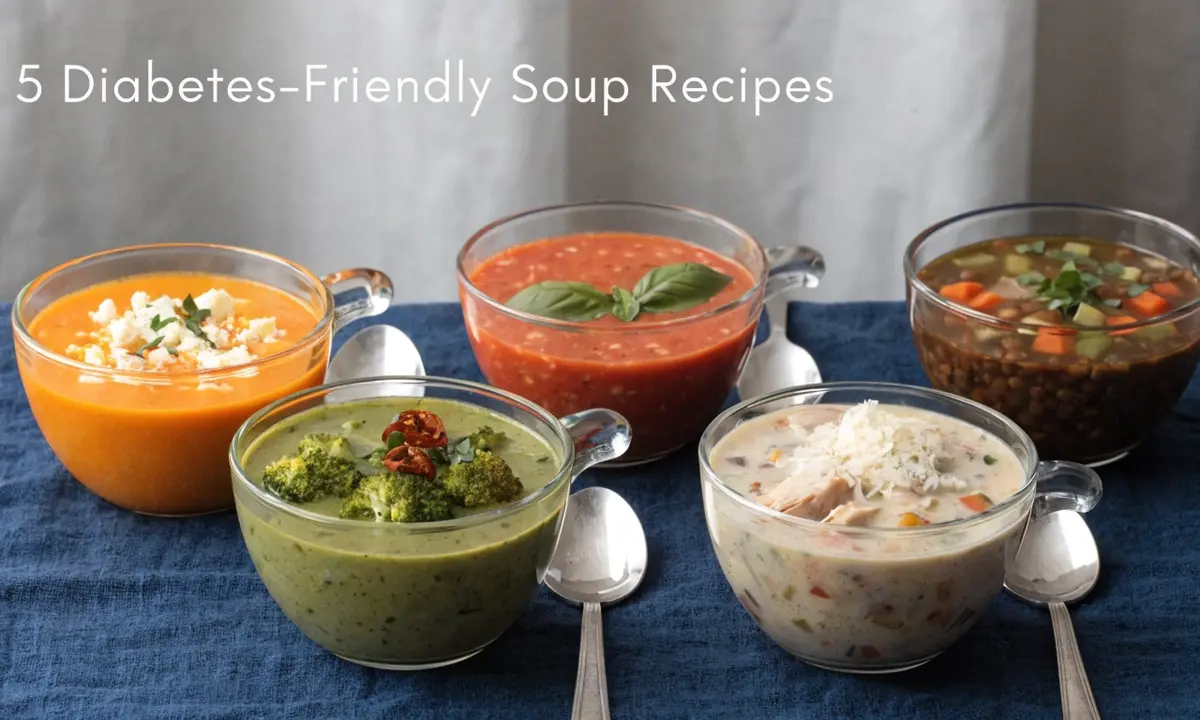
5 Diabetes-Friendly Soup Recipes That Actually Fill You Up
Soup is one of the best meals you can make when you have diabetes. A big bowl of something warm and brothy can genuinely fill you up with far fewer carbohydrates than a sandwich, a plate of pasta, or a takeaway. The problem is most soup recipes online are vague — they list ingredients without measurements, skip the nutrition data, and give you no way to know whether the finished dish is actually safe for your blood sugar.
This article gives you five complete soup recipes — each with exact gram measurements, step-by-step instructions, a full nutritional breakdown per serving, and an honest assessment of the blood sugar impact. All five are tested, satisfying, and built around the principle that diabetic-friendly food should taste like real food, not a medical compromise.
Each recipe below includes net carbs per serving. Net carbs = total carbohydrates minus fiber. This is the figure that matters most for blood sugar management, because fiber is not absorbed and does not raise blood glucose.
Why Soup Is Particularly Good for Blood Sugar Management
Three things make soup a standout choice for people with diabetes:
- High water content slows digestion — the liquid in soup physically slows the rate at which carbohydrates leave your stomach and enter your bloodstream, producing a flatter, more gradual blood sugar rise compared to the same ingredients eaten dry.
- Easy portion control — a serving of soup has a defined volume. Unlike snacks or side dishes, it’s straightforward to eat one bowl and stop.
- Naturally high fiber — vegetable-based soups are full of fiber from legumes, leafy greens, and non-starchy vegetables, all of which reduce the glycemic impact of any carbohydrates present.
Research published in the British Journal of Nutrition found that consuming soup before a meal reduced overall calorie intake by up to 20% — relevant for diabetics managing weight alongside blood sugar.
Recipe 1: Red Lentil and Cumin Soup
This is the soup I come back to every week. Red lentils dissolve into the broth as they cook, giving the soup a naturally creamy, thick texture without any cream or starch. The cumin and smoked paprika add real depth. It takes about 35 minutes from start to finish and costs almost nothing to make.
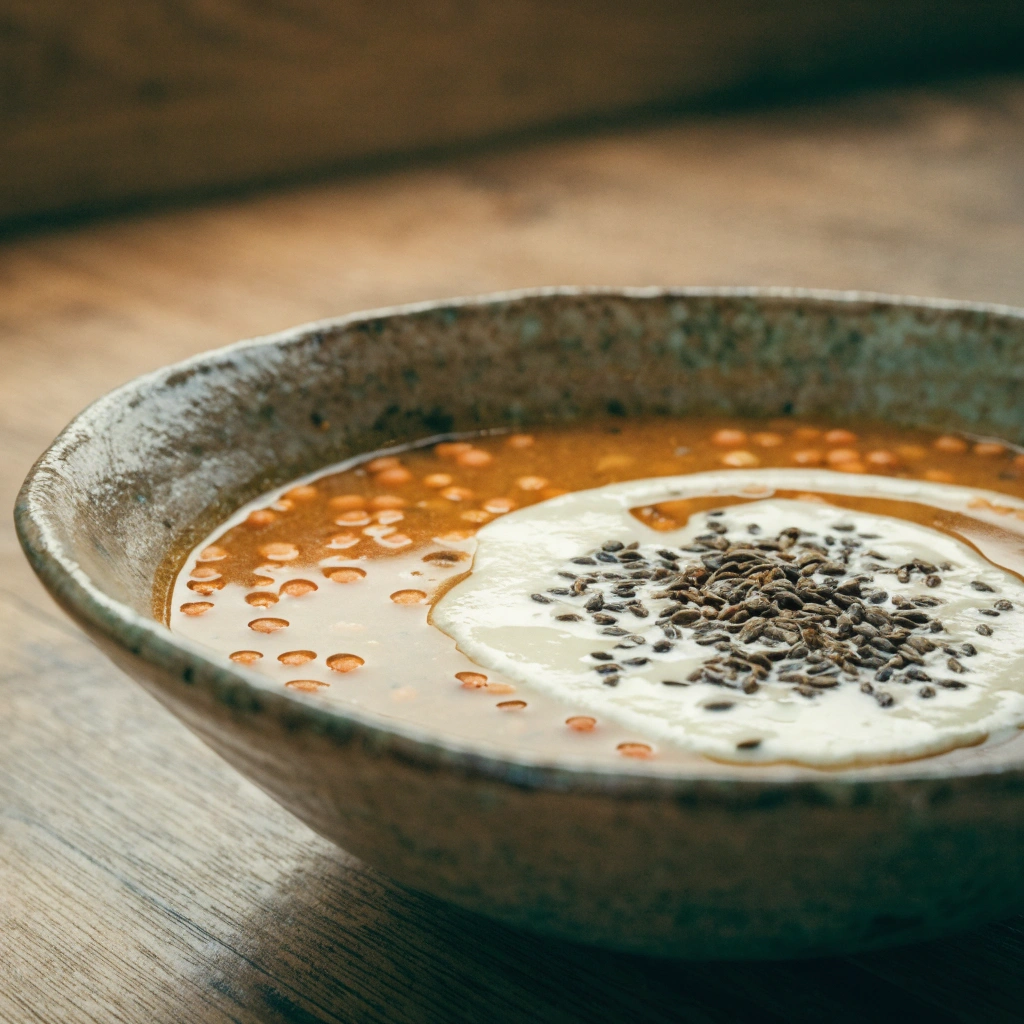
Red lentils are one of the best legumes for blood sugar management — they have a glycemic index of approximately 21, one of the lowest of any carbohydrate-containing food, and provide 8g of fiber per 100g dry weight.
| Prep time | Cook time | Servings | Difficulty |
| 10 min | 25 min | 4 servings | Easy |
Ingredients
- 200g (1 cup) red lentils, rinsed until water runs clear
- 1 tbsp (15ml) olive oil
- 1 large onion (about 200g), finely diced
- 3 garlic cloves, minced
- 1 tsp ground cumin
- 1 tsp smoked paprika
- ½ tsp ground turmeric
- ¼ tsp cayenne pepper (optional — omit if sensitive to heat)
- 400g (1 can) chopped tomatoes
- 1 litre (4 cups) low-sodium vegetable stock
- Juice of 1 lemon (about 3 tbsp)
- Salt and black pepper to taste
- Small bunch of fresh coriander or parsley to serve
Method
- Heat the olive oil in a large saucepan over medium heat. Add the diced onion and cook, stirring occasionally, for 7–8 minutes until soft and translucent. Don’t rush this step — properly softened onion is the flavour base.
- Add the garlic, cumin, smoked paprika, turmeric, and cayenne (if using). Stir constantly for 60–90 seconds until fragrant. The spices should sizzle gently in the oil.
- Pour in the chopped tomatoes and stir to combine with the spices. Cook for 2 minutes.
- Add the rinsed lentils and vegetable stock. Stir well. Bring to a boil, then reduce heat to low-medium and simmer uncovered for 20–22 minutes, stirring occasionally, until the lentils have completely broken down and the soup is thick.
- Squeeze in the lemon juice. Taste and season with salt and pepper. The lemon is not optional — it lifts the whole soup and balances the earthiness of the lentils.
- Serve immediately in warmed bowls, topped with fresh coriander or parsley. Drizzle with a small amount of extra virgin olive oil if desired.
💡 Tip: Make a double batch and freeze in individual portions. Lentil soup freezes beautifully for up to 3 months. Reheat from frozen in a saucepan over low heat with a splash of water to loosen.
Nutritional Information (per serving — 1 of 4)
| Nutrient | Per serving |
| Calories | 245 kcal |
| Total carbohydrates | 38g |
| Fiber | 9g |
| Net carbs | 29g |
| Sugars (natural) | 7g |
| Protein | 14g |
| Total fat | 5g |
| Saturated fat | 0.7g |
| Sodium | 310mg (using low-sodium stock) |
| Glycemic index (estimated) | ~25 — low |
29g net carbs per bowl is moderate for a full meal. Pair with a side of leafy green salad (no croutons) to add volume without carbs. Avoid bread on the side — it’s not needed and significantly raises the meal’s glycemic load.
Recipe 2: Chicken, Spinach & Vegetable Soup
This is the closest thing to a complete, balanced meal in a bowl. Lean chicken breast provides 30g of protein per serving with zero carbohydrates. The vegetables add fiber and micronutrients. The broth keeps everything light. It’s the soup to make when you want something genuinely nourishing that won’t disturb your blood sugar at all.
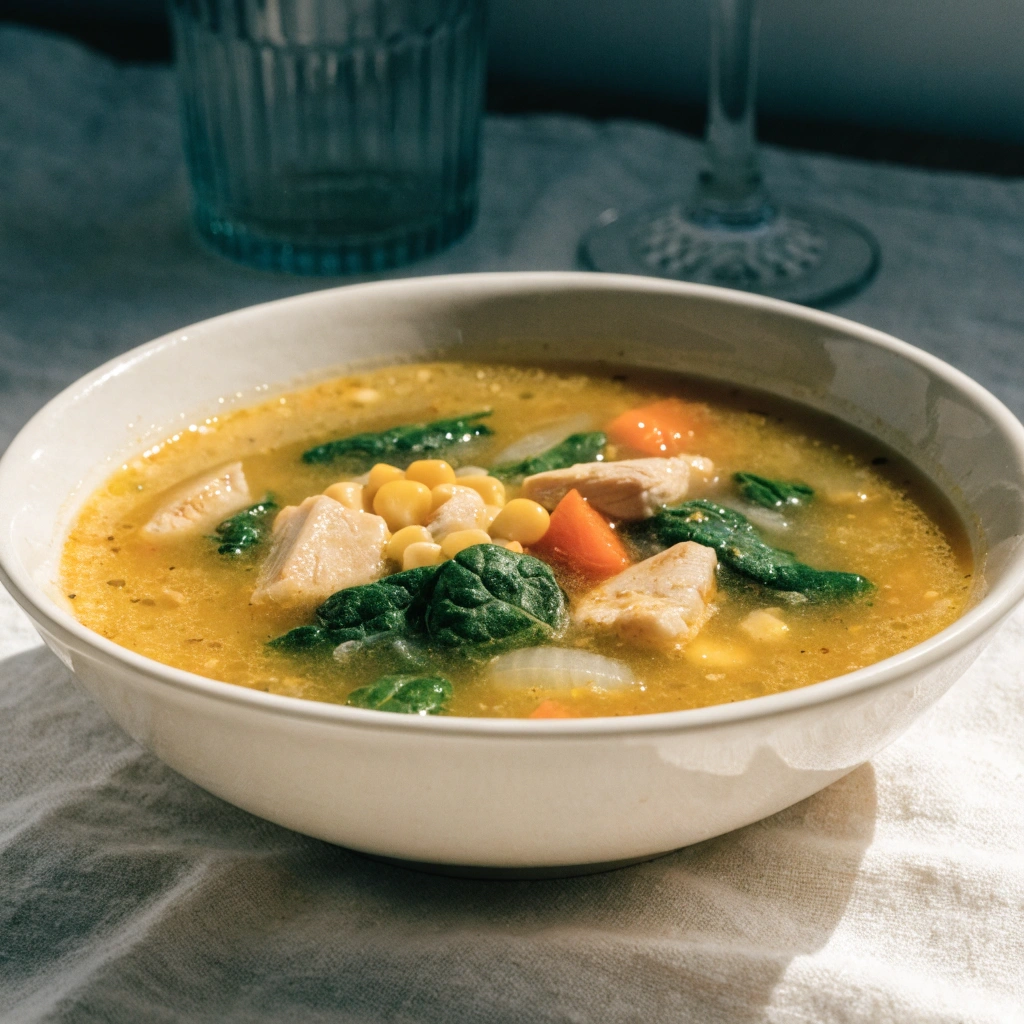
Protein has almost no glycemic impact. A bowl of this soup produces a very flat blood glucose response for most people with Type 2 diabetes, making it an excellent lunch or dinner option.
| Prep time | Cook time | Servings | Difficulty |
| 15 min | 30 min | 4 servings | Easy |
Ingredients
- 500g chicken breast (2 large breasts), trimmed of fat
- 1 tbsp (15ml) olive oil
- 1 medium onion (150g), diced
- 3 garlic cloves, minced
- 2 medium carrots (200g total), sliced into rounds
- 2 celery stalks (100g), sliced
- 1 medium courgette / zucchini (200g), diced
- 1 tsp dried thyme
- 1 tsp dried rosemary
- ½ tsp ground black pepper
- 1.2 litres (5 cups) low-sodium chicken stock
- 100g (3½ oz) fresh baby spinach
- Juice of half a lemon
- Salt to taste
- Fresh parsley to serve
Method
- Place the chicken breasts in the cold stock in a large saucepan. Bring to a gentle simmer over medium heat. Poach for 18–20 minutes until cooked through (internal temperature of 74°C / 165°F). Remove the chicken and set aside to rest. Reserve the poaching stock.
- In a separate large pot, heat the olive oil over medium heat. Add the onion, carrots, and celery. Cook for 8 minutes, stirring occasionally, until softened.
- Add the garlic, thyme, rosemary, and black pepper. Stir for 60 seconds.
- Pour in the reserved chicken poaching stock. Bring to a simmer and cook for 10 minutes until the carrots are fully tender.
- While the soup simmers, shred or chop the rested chicken into bite-sized pieces.
- Add the diced courgette to the pot. Simmer for 4 minutes.
- Add the shredded chicken and baby spinach. Stir for 1–2 minutes until the spinach has wilted.
- Squeeze in the lemon juice. Taste and adjust seasoning. Serve immediately with fresh parsley.
💡 Tip: For meal prep, store the soup and any extra chicken separately. The soup keeps in the fridge for 4 days. Chicken added directly to stored soup can become rubbery — add it fresh when reheating.
Nutritional Information (per serving — 1 of 4)
| Nutrient | Per serving |
| Calories | 220 kcal |
| Total carbohydrates | 12g |
| Fiber | 3g |
| Net carbs | 9g |
| Sugars (natural) | 5g |
| Protein | 30g |
| Total fat | 6g |
| Saturated fat | 1.2g |
| Sodium | 290mg (using low-sodium stock) |
| Glycemic index (estimated) | ~15 — very low |
9g net carbs per serving is very low for a full meal. This soup has almost no blood sugar impact for most people. It’s an ideal option if you’re eating later in the evening and want to avoid overnight glucose fluctuations.
Recipe 3: Diabetic-Friendly Minestrone
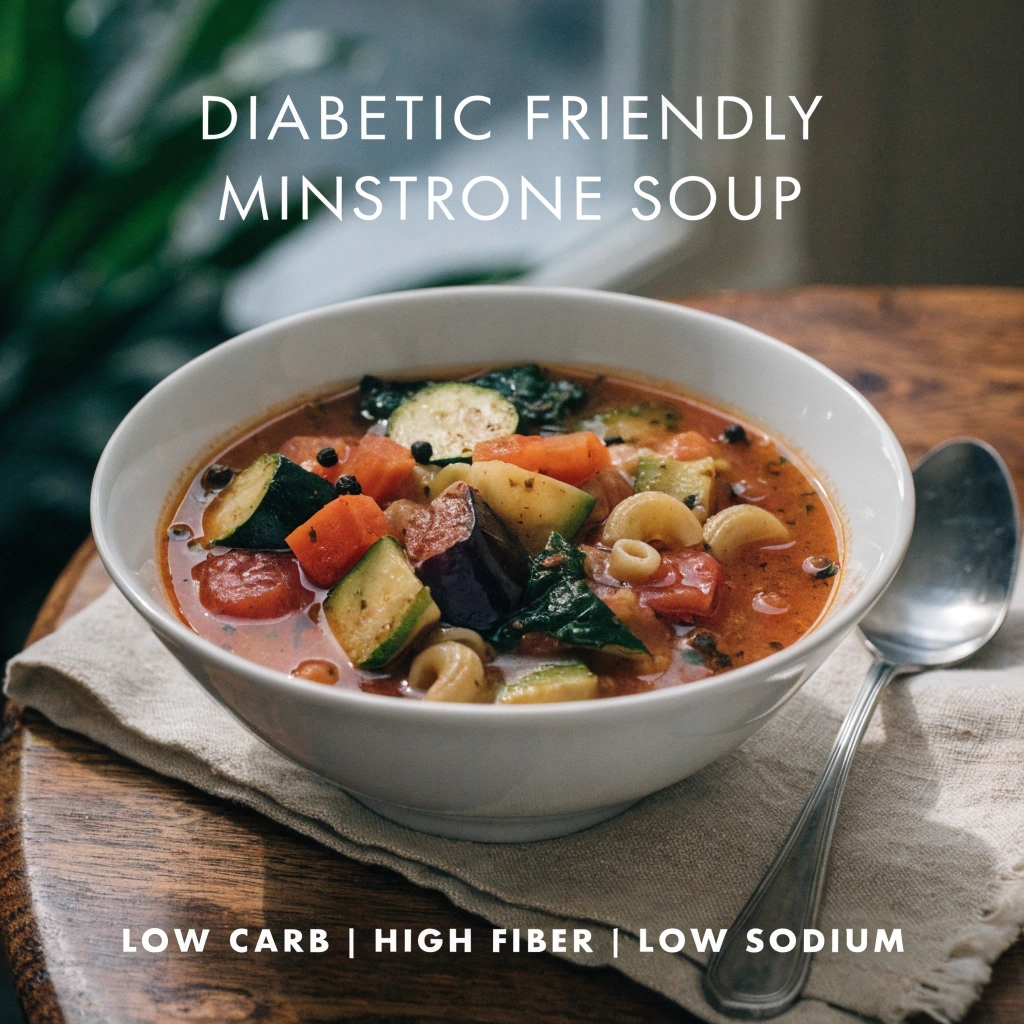
Traditional minestrone is high in carbohydrates because of the pasta and sometimes white beans. This version keeps the rich tomato broth and all the vegetables but uses a small amount of whole wheat pasta (for fiber) and reduces the pasta quantity significantly compared to restaurant versions. The result is a proper, satisfying minestrone that lands at around 22g net carbs per bowl.
| Prep time | Cook time | Servings | Difficulty |
| 15 min | 35 min | 6 servings | Easy |
Ingredients
- 1 tbsp (15ml) olive oil
- 1 medium onion (150g), diced
- 2 garlic cloves, minced
- 2 medium carrots (200g), diced small
- 2 celery stalks (100g), diced
- 1 medium courgette / zucchini (200g), diced
- 1 red bell pepper (150g), diced
- 400g (1 can) chopped tomatoes
- 400g (1 can) cannellini beans, drained and rinsed — about 240g drained weight
- 1.5 litres (6 cups) low-sodium vegetable stock
- 2 tsp dried Italian herbs (basil, oregano, thyme mix)
- 1 tsp smoked paprika
- 80g (3 oz) whole wheat small pasta (ditalini, small macaroni, or broken spaghetti)
- 100g (3½ oz) cavolo nero or kale, thick stems removed, roughly chopped
- Salt and black pepper to taste
- 1 tbsp fresh lemon juice
- Parmesan rind (optional — add during simmering for depth, remove before serving)
Method
- Heat olive oil in a large heavy pot over medium heat. Add onion, carrots, and celery. Cook for 8–10 minutes, stirring, until softened.
- Add the garlic, Italian herbs, and smoked paprika. Stir for 60 seconds.
- Add the bell pepper and courgette. Cook for 3 minutes.
- Pour in the chopped tomatoes and stock. Add the Parmesan rind if using. Bring to a boil, then reduce to a gentle simmer. Cook for 15 minutes.
- Add the whole wheat pasta and cannellini beans. Simmer for the pasta’s package time (usually 8–10 minutes for small shapes) until the pasta is just cooked — al dente. Do not overcook: overcooked pasta has a higher glycemic index than al dente pasta.
- Stir in the cavolo nero or kale. Simmer for 3–4 minutes until tender.
- Remove the Parmesan rind if used. Add lemon juice. Taste and season with salt and pepper.
- Serve immediately. This soup thickens significantly as it sits — add a splash of hot water when reheating leftovers.
💡 Tip: Al dente pasta genuinely has a lower GI than soft-cooked pasta. Starchy carbohydrates release glucose more slowly when they still have some bite. Set a timer and pull the soup off the heat as soon as the pasta is just done.
Nutritional Information (per serving — 1 of 6)
| Nutrient | Per serving |
| Calories | 230 kcal |
| Total carbohydrates | 38g |
| Fiber | 9g |
| Net carbs | 29g |
| Sugars (natural) | 8g |
| Protein | 10g |
| Total fat | 4g |
| Saturated fat | 0.6g |
| Sodium | 320mg (using low-sodium stock) |
| Glycemic index (estimated) | ~35 — low-medium |
Recipe 4: Spicy Black Bean Soup
Black beans are outstanding for blood sugar control. They have a glycemic index of around 20 and contain resistant starch — a type of carbohydrate that feeds beneficial gut bacteria rather than raising blood sugar. A single serving of this soup provides 14g of fiber, which is more than half the daily recommended intake for most adults.
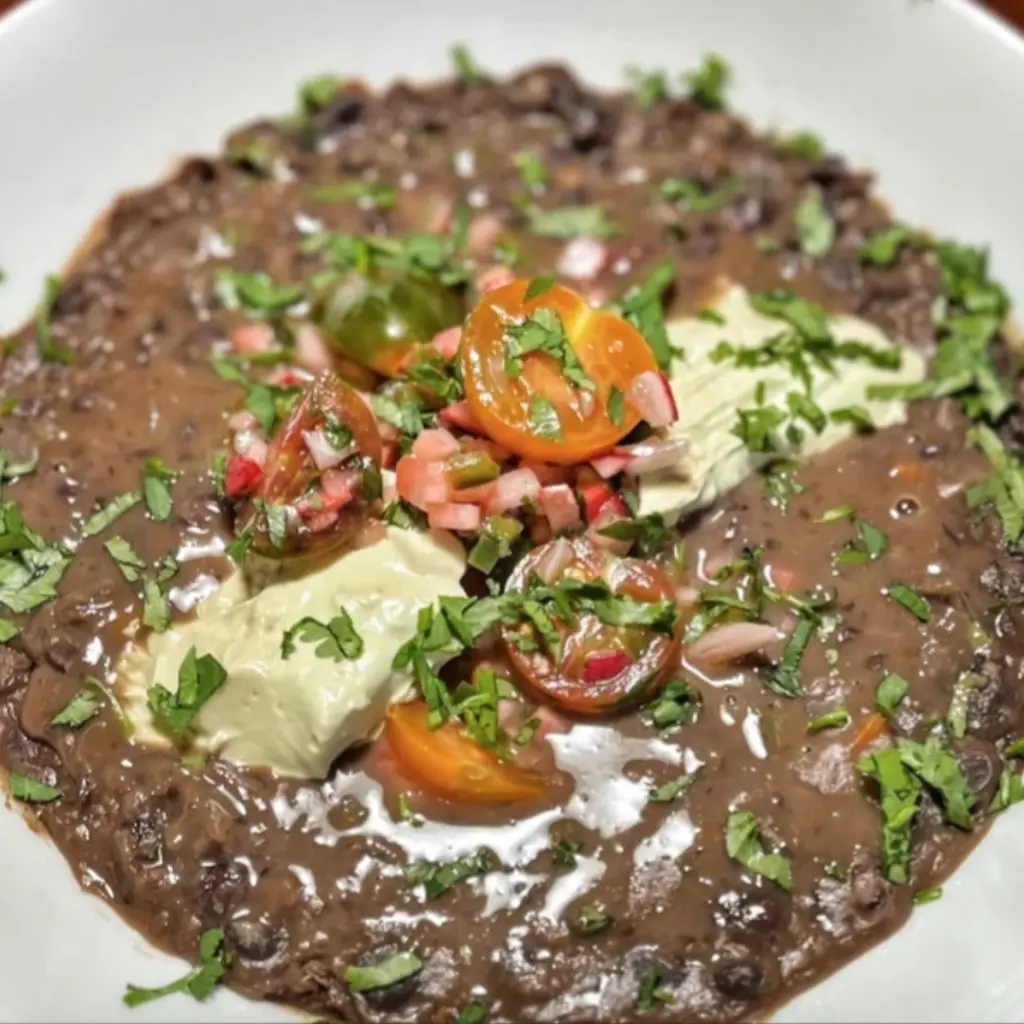
This soup is also genuinely bold and satisfying — smoky, slightly spicy, with a deep richness from the cumin and chipotle. It doesn’t taste like diet food.
| Prep time | Cook time | Servings | Difficulty |
| 10 min | 30 min | 4 servings | Easy |
Ingredients
- 2 cans (800g total) black beans, drained and rinsed — about 480g drained weight
- 1 tbsp (15ml) olive oil
- 1 large onion (200g), diced
- 4 garlic cloves, minced
- 1 red bell pepper (150g), diced
- 2 tsp ground cumin
- 1 tsp smoked paprika
- ½ tsp chipotle powder (or ¼ tsp cayenne — adjust to taste)
- ½ tsp ground coriander
- 400g (1 can) chopped tomatoes
- 750ml (3 cups) low-sodium vegetable or chicken stock
- Juice of 1 lime
- Salt and pepper to taste
- To serve: small dollop of plain Greek yoghurt (not sour cream), fresh coriander, lime wedge
Method
- Heat olive oil in a large saucepan over medium-high heat. Add the onion and bell pepper. Cook for 6–7 minutes, stirring, until softened and beginning to colour at the edges.
- Add the garlic, cumin, smoked paprika, chipotle powder, and ground coriander. Stir constantly for 90 seconds. The spices should smell toasted — not burnt. Reduce heat if needed.
- Add the chopped tomatoes and stir to combine. Cook for 3 minutes.
- Add the drained black beans and stock. Stir well. Bring to a boil, then reduce to a steady simmer. Cook uncovered for 20 minutes, stirring occasionally.
- After 20 minutes, use the back of a wooden spoon or a potato masher to crush approximately one-third of the beans directly in the pot. This thickens the soup naturally without adding any starch or cream. Stir to combine.
- Add lime juice. Taste and adjust seasoning — this soup often needs more salt than you expect because of the bold spice profile.
- Serve topped with a tablespoon of plain Greek yoghurt (adds protein, no appreciable carbs), fresh coriander, and a lime wedge.
💡 Tip: Greek yoghurt instead of sour cream: plain full-fat Greek yoghurt has about 4g carbs per 100g and 9g protein. Sour cream has similar carbs but far less protein and more saturated fat. The yoghurt is a meaningful nutritional upgrade on a diabetic-friendly bowl.
Nutritional Information (per serving — 1 of 4, without yoghurt topping)
| Nutrient | Per serving |
| Calories | 265 kcal |
| Total carbohydrates | 44g |
| Fiber | 14g |
| Net carbs | 30g |
| Sugars (natural) | 6g |
| Protein | 14g |
| Total fat | 5g |
| Saturated fat | 0.7g |
| Sodium | 340mg (using low-sodium stock) |
| Glycemic index (estimated) | ~22 — very low |
Despite 44g total carbs, the 14g of fiber brings the net carbs to 30g — and the resistant starch in black beans means the actual blood sugar impact is lower than even the net carb figure suggests. This is one of the most blood-sugar-friendly high-carb foods available.
Recipe 5: Broccoli and Cheddar Soup (without the flour)
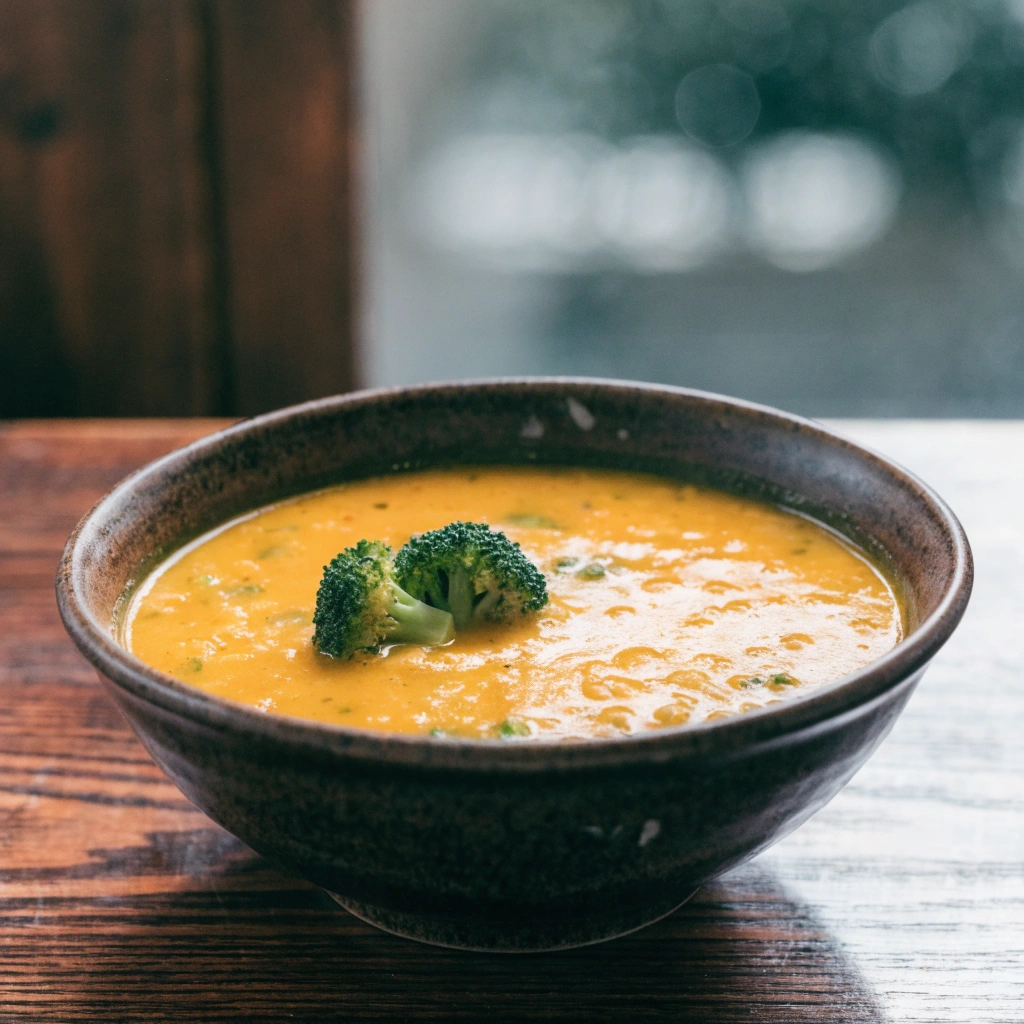
Restaurant versions of broccoli cheddar soup are typically thickened with white flour and contain 30–40g of carbs per bowl before you add the bread bowl. This version uses blended cauliflower as the thickener instead — it creates a genuinely creamy, rich texture with almost no carbs and no flavour compromise. The finished soup tastes indulgent without the blood sugar cost.
| Prep time | Cook time | Servings | Difficulty |
| 15 min | 30 min | 4 servings | Medium |
Ingredients
- 400g (14 oz) broccoli, cut into florets — stems peeled and diced too (don’t waste them)
- 300g (10½ oz) cauliflower florets — this is your thickener
- 1 tbsp (15ml) olive oil or butter
- 1 medium onion (150g), diced
- 3 garlic cloves, minced
- 1 tsp Dijon mustard
- ½ tsp smoked paprika
- ¼ tsp ground nutmeg
- 800ml (3¼ cups) low-sodium vegetable or chicken stock
- 150ml (⅔ cup) whole milk or unsweetened oat milk
- 100g (3½ oz) mature cheddar, grated — mature cheddar has more flavour so you need less
- Salt and white pepper to taste
- Extra grated cheddar and a pinch of paprika to serve
Method
- Heat oil or butter in a large pot over medium heat. Add the onion and cook for 6 minutes until softened. Add garlic and cook for 1 minute more.
- Add the cauliflower florets and stock. Bring to a boil, reduce heat, and simmer for 12 minutes until the cauliflower is very tender — it should break apart easily when pressed with a spoon.
- Use an immersion blender to blend the cauliflower and stock until completely smooth. Alternatively, transfer carefully in batches to a standing blender. The result should be a thick, creamy white liquid — this is your base.
- Return the pot to medium heat. Add the Dijon mustard, smoked paprika, and nutmeg. Stir to combine.
- Add the broccoli florets and stem pieces. Simmer for 8–10 minutes until the broccoli is tender but still bright green. Do not overcook — grey broccoli is both less appealing and less nutritious.
- Reduce heat to low. Add the milk and stir. Then add the grated cheddar a handful at a time, stirring between each addition until fully melted. Do not boil after adding the cheese — it will cause the soup to split.
- Taste and season with salt and white pepper. Serve immediately, topped with a pinch of extra cheese and smoked paprika.
💡 Tip: Use mature or extra-mature cheddar. A stronger cheese means you use less to achieve the same flavour impact — which reduces both the saturated fat and calorie content without sacrificing taste.
Nutritional Information (per serving — 1 of 4)
| Nutrient | Per serving |
| Calories | 235 kcal |
| Total carbohydrates | 16g |
| Fiber | 5g |
| Net carbs | 11g |
| Sugars (natural) | 7g |
| Protein | 14g |
| Total fat | 14g |
| Saturated fat | 7g |
| Sodium | 380mg (using low-sodium stock) |
| Glycemic index (estimated) | ~20 — low |
11g net carbs per bowl is very low for a creamy, filling soup. The saturated fat is higher than the other recipes here because of the cheddar — keep this in mind if you are also managing cholesterol. It is an excellent choice for low-carb days.
All 5 Soups at a Glance
Use this table to choose the right soup for your carb budget and health goals on any given day.
| Soup | Calories | Net carbs | Protein | Est. GI | Best for |
| Red Lentil & Cumin | 245 kcal | 29g | 14g | ~25 | Budget meal prep |
| Chicken, Spinach & Veg | 220 kcal | 9g | 30g | ~15 | Low-carb dinner |
| Minestrone | 230 kcal | 29g | 10g | ~35 | Family meal |
| Spicy Black Bean | 265 kcal | 30g | 14g | ~22 | High fiber day |
| Broccoli & Cheddar | 235 kcal | 11g | 14g | ~20 | Low-carb treat |
Common Questions
Can I eat soup every day with diabetes?
Yes — provided the soup is genuinely low in refined carbohydrates and sodium. The soups in this article are all appropriate for daily eating. The one thing to watch is sodium: even low-sodium stock contains salt, and multiple bowls per day can add up. If you’re monitoring blood pressure alongside diabetes, use homemade stock where possible, or rinse canned beans thoroughly to remove excess sodium.
Which soup in this article is lowest in carbs?
Chicken, Spinach & Vegetable Soup at 9g net carbs per serving. Broccoli and Cheddar is second at 11g net carbs. Both are suitable for very low-carb meal plans.
Can I use these recipes if I take insulin?
Yes, but soup can be trickier to dose for than solid meals because the liquid slows absorption and may produce a delayed glucose rise. If you’re on rapid-acting insulin, you may find that dosing slightly later than usual (after you’ve started eating rather than before) works better with soup. Discuss timing with your diabetes care team.
What bread can I eat with soup if I have diabetes?
The honest answer is: soup doesn’t need bread, and adding bread significantly raises the glycemic load of the meal. If you want something to dip, a small slice of dense, seeded rye sourdough (GI ~45–55) is the best option — choose the smallest slice, eat it slowly, and test your blood sugar afterwards to understand your personal response. Avoid white rolls, white baguette, and crackers.
Can I freeze all of these soups?
Yes — all five soups freeze well for up to 3 months. The exception is the Broccoli and Cheddar soup, which can separate slightly when thawed. Reheat it gently over low heat and stir continuously to bring it back together. The lentil, chicken, minestrone, and black bean soups all freeze and reheat without any texture change.
How do I reduce the sodium in these recipes?
Use homemade stock with no added salt, or buy the lowest-sodium commercial stock you can find (look for under 150mg sodium per cup). Drain and rinse canned beans before adding them — this removes up to 40% of the sodium they were packed in. Season with lemon juice, lime juice, or vinegar instead of extra salt — acid enhances flavour without adding sodium.
Medical disclaimer: The nutritional information in this article is calculated to the best of our ability using standard food composition data. Individual responses to these meals will vary. People with diabetes, particularly those managing insulin, should consult a registered dietitian or healthcare provider before making significant changes to their diet. Always monitor your own blood glucose levels when trying new foods.
Last updated: March 2026 | diabeticrecip.com/