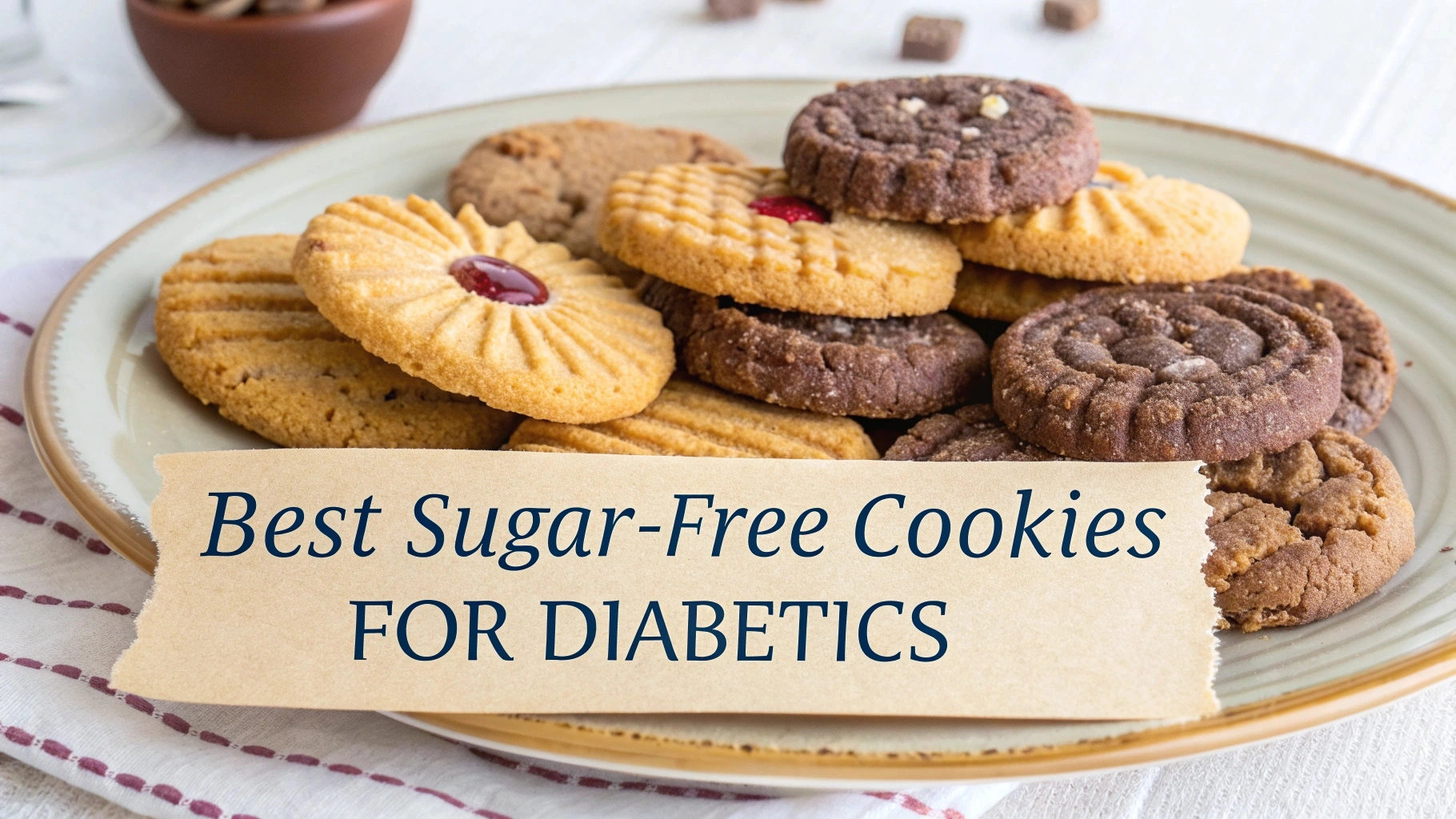
Sugar-Free Cookies for Diabetics: 3 Recipes That Actually Taste Good
Written and tested by Lylia. Nutritional estimates calculated using standard USDA ingredient data. This article is for general informational purposes only and is not medical or dietary advice. If you’re managing diabetes or another blood sugar condition, please talk with your doctor or a registered dietitian before making changes to your diet.
I was diagnosed with Type 2 diabetes four years ago, and the hardest part wasn’t the medication or the finger pricks. It was handing out Halloween candy to the kids in my neighborhood while eating nothing. I missed cookies. Specifically, the warm, slightly crispy, slightly chewy kind you pull from the oven on a Sunday afternoon.
What I didn’t know then is that cookies and diabetes aren’t mutually exclusive — you just need to rethink three things: the flour, the sweetener, and the fat. Get those right, and you end up with something genuinely satisfying, not a sad compromise.
This article gives you three tested recipes — almond flour chocolate chip, peanut butter, and oatmeal — with full nutritional information for each. I also explain which sweeteners work best for baking and why, so you can adapt any cookie recipe on your own.
Quick note: everyone’s blood sugar responds differently to the same food. These recipes are designed to minimize blood sugar impact, but always test after eating something new. Consult your dietitian if you’re managing insulin alongside diet.
Sweeteners That Work for Diabetic Baking
Regular sugar (sucrose) has a glycemic index of around 65. It breaks down quickly and sends blood glucose up fast. The sweeteners below don’t do that — but they behave differently from sugar in the oven, so it’s worth understanding each one before you start.
Erythritol — reliable, with one caveat worth knowing
Erythritol is a sugar alcohol that your body absorbs but largely doesn’t metabolize, so it contributes virtually zero net carbs and has a glycemic index close to 0. It’s about 70% as sweet as sugar and measures roughly 1:1 in most baking recipes. It creates a slight cooling sensation on the tongue — most people don’t notice it in cookies.
Worth knowing before you bake with it regularly: Cleveland Clinic research has added to a growing body of evidence linking erythritol intake to increased markers of cardiovascular risk, including in a 2024 study that measured effects on blood clotting activity. This is an active, evolving area of research rather than settled science, and the studies involved amounts higher than what’s in a cookie or two — but if you have existing heart disease, or eat erythritol-sweetened foods frequently across the day, it’s a reasonable thing to mention to your doctor rather than assume is risk-free simply because it doesn’t spike blood glucose.
Best for: chocolate chip cookies, shortbread, any recipe that needs bulk — just don’t treat it as a sweetener you can use without limit simply because it’s “sugar-free.”
Monk fruit sweetener
Monk fruit extract is 150–200x sweeter than sugar, so commercial monk fruit sweeteners are usually blended with erythritol to make them measure like sugar (which means the erythritol caveat above applies to blends too — check the label). GI is close to 0. No cooling sensation. Slightly more expensive than erythritol, but a very clean taste.
Best for: any recipe where you want no aftertaste at all.
Allulose
Allulose is a rare sugar that occurs naturally in figs and raisins. It behaves almost exactly like regular sugar in baking — it browns, it caramelizes, it creates a chewy texture. Its glycemic effect is minimal. It’s only about 70% as sweet as sugar, so you’ll use slightly more.
Best for: chewy cookies, anything where browning matters.
What to avoid
- Maltitol — commonly used in store-bought “sugar-free” products. Its glycemic index is meaningfully higher than the other options here and can cause noticeable blood sugar rises in many people.
- Sorbitol — similar issue, plus digestive discomfort at higher quantities.
- Agave syrup — marketed as “natural” and “low GI,” but it’s very high in fructose and not a good choice if you’re managing diabetes.
Recipe 1: Almond Flour Chocolate Chip Cookies
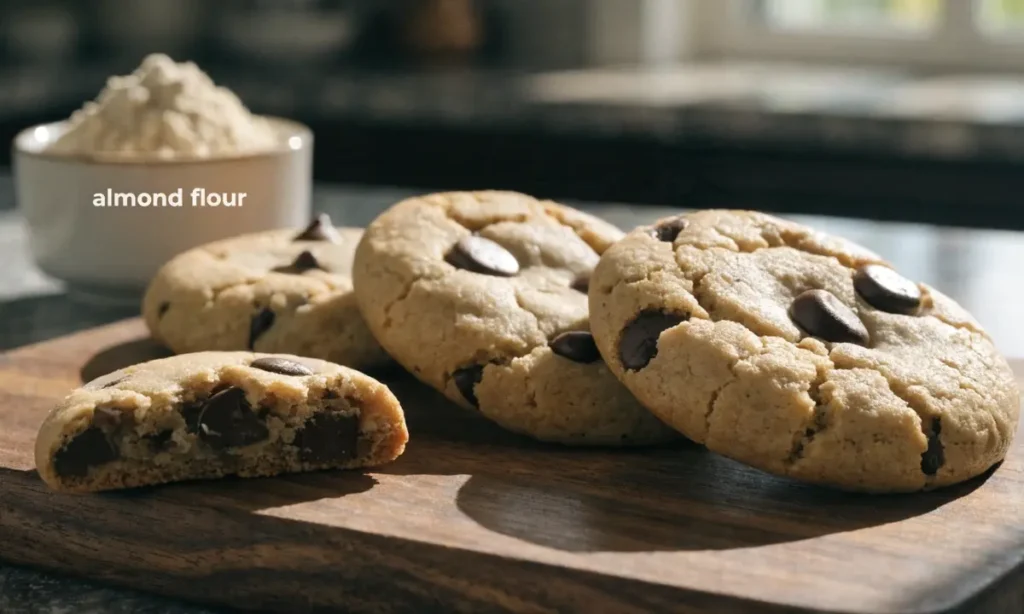
This is the closest thing to a classic chocolate chip cookie I’ve found. The almond flour gives it a buttery, slightly dense texture. The erythritol caramelizes just enough around the edges.
Ingredients (makes 16 cookies)
- 2 cups (200g) blanched almond flour — not almond meal, which is coarser
- ½ cup (96g) erythritol or monk fruit blend
- ¼ tsp fine salt
- ¼ tsp baking soda
- 1 large egg, room temperature
- 3 tbsp (42g) unsalted butter, melted and slightly cooled
- 1 tsp pure vanilla extract
- ½ cup (85g) sugar-free dark chocolate chips (look for 72% cacao or higher)
Method
- Preheat your oven to 175°C (350°F). Line a baking sheet with parchment paper.
- Whisk together the almond flour, erythritol, salt, and baking soda, breaking up any lumps.
- Add the egg, melted butter, and vanilla. Mix until a dough forms — it will be slightly sticky, which is normal.
- Fold in the chocolate chips.
- Roll into 16 equal balls (about 1.5 tablespoons each), spaced about 5cm apart on the sheet.
- Flatten each ball gently — almond flour cookies don’t spread much on their own.
- Bake 11–13 minutes, until the edges are golden and the tops look just set. The centers will seem underdone — that’s correct, and they firm up as they cool.
- Leave on the tray for 10 minutes before transferring; they’re fragile while hot.
Tips
- Room-temperature egg matters — a cold egg makes the butter solidify and creates uneven dough.
- Don’t overbake; the “underdone” center becomes perfectly chewy once cooled.
- Store airtight at room temperature for up to 4 days, or freeze for up to 3 months.
Estimated Nutrition (Per Cookie)
| Nutrient | Amount |
|---|---|
| Calories | ~120 |
| Total Fat | ~10g |
| Total Carbohydrates | ~6g |
| Fiber | ~2g |
| Net Carbs | ~4g |
| Sugar Alcohols | ~3g |
| Protein | ~3.5g |
| Glycemic Index (estimated) | Low (roughly <20) |
Net carbs = total carbs minus fiber and sugar alcohols. These are calculated estimates, not lab-tested values, and individual response varies.
Recipe 2: 3-Ingredient Peanut Butter Cookies
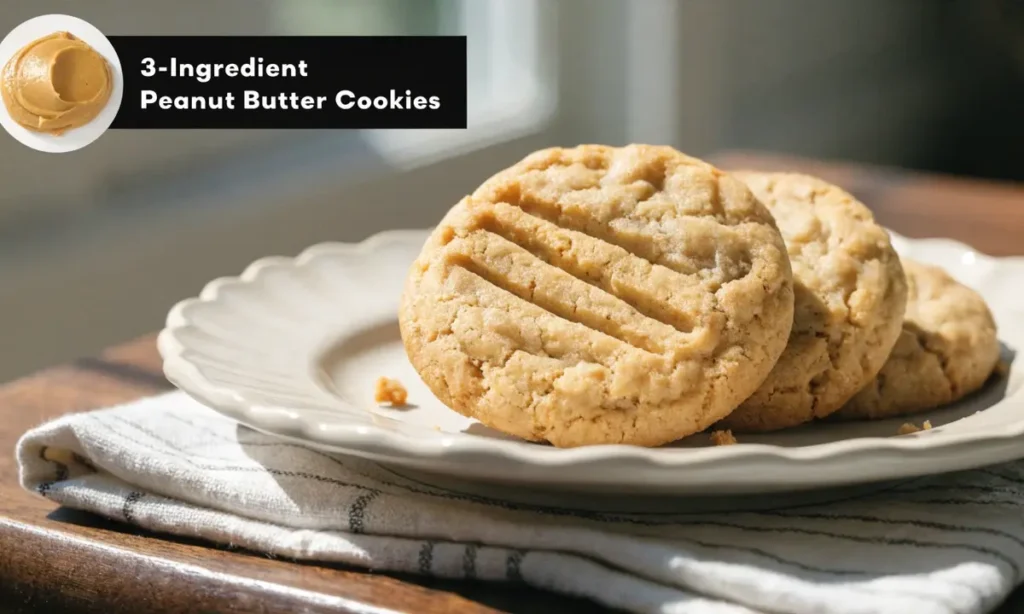
This is the one I make when I want something in under 20 minutes. The peanut butter does everything — fat, protein, structure, and flavor all at once.
Ingredients (makes 12 cookies)
- 1 cup (250g) natural peanut butter, no added sugar (check the label: peanuts and salt only)
- ½ cup (96g) erythritol
- 1 large egg
- Optional: 1 tsp vanilla extract, pinch of salt if using unsalted peanut butter
Method
- Preheat oven to 175°C (350°F). Line a baking sheet with parchment.
- Mix all ingredients until fully combined — the dough will be thick and a little oily.
- Scoop into 12 equal balls on the sheet.
- Press a fork crosshatch into each, flattening to about 1cm thick.
- Bake 10–12 minutes, until golden but still slightly soft to the touch.
- Cool completely on the tray before moving; they’re fragile while warm.
Estimated Nutrition (Per Cookie)
| Nutrient | Amount |
|---|---|
| Calories | ~145 |
| Total Fat | ~12g |
| Total Carbohydrates | ~7g |
| Fiber | ~1g |
| Net Carbs | ~3g |
| Sugar Alcohols | ~3g |
| Protein | ~6g |
| Glycemic Index (estimated) | Low (roughly <25) |
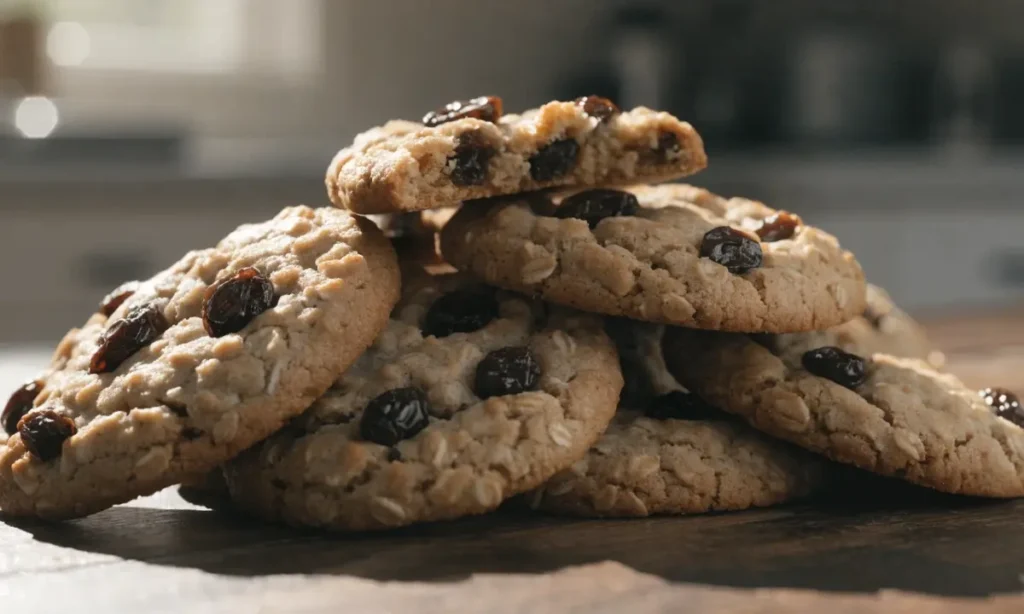
Recipe 3: Oatmeal Raisin Cookies (with a GI Trick)
Oatmeal cookies are tricky if you’re managing diabetes, since rolled oats do raise blood sugar — but the practical glycemic impact depends a lot on preparation. Soaking the oats before baking, and using a higher ratio of fat and protein, appears to slow glucose release compared to a standard oatmeal cookie, though this hasn’t been formally lab-tested for this specific recipe.
The technique: soak the oats
Soak your rolled oats in the wet ingredients (beaten egg + melted butter) for 15 minutes before mixing in the dry ingredients. This begins breaking down the starch structure and also makes the cookie chewier.
Ingredients (makes 18 cookies)
- 1 cup (90g) old-fashioned rolled oats — not instant
- 1 cup (100g) almond flour
- ½ cup (96g) erythritol or allulose
- ½ tsp cinnamon
- ¼ tsp baking soda
- ¼ tsp salt
- 1 large egg
- ⅓ cup (75g) unsalted butter, melted
- 1 tsp vanilla extract
- ⅓ cup (50g) raisins — optional, adds roughly 2g net carbs per cookie; skip or use sugar-free dried cranberries to reduce further
Method
- Combine the egg, melted butter, and vanilla. Stir in the rolled oats and let soak for 15 minutes.
- Preheat oven to 175°C (350°F) while the oats soak.
- Add almond flour, erythritol, cinnamon, baking soda, and salt. Stir until combined.
- Fold in raisins if using.
- Scoop heaped tablespoons onto a parchment-lined sheet, 5cm apart, and flatten gently.
- Bake 12–14 minutes until edges are golden; centers will look underdone, which is correct.
- Cool on the tray for 15 minutes before moving.
Estimated Nutrition (Per Cookie, Without Raisins)
| Nutrient | Amount |
|---|---|
| Calories | ~105 |
| Total Fat | ~8g |
| Total Carbohydrates | ~8g |
| Fiber | ~1.5g |
| Net Carbs | ~5g |
| Sugar Alcohols | ~1.5g |
| Protein | ~3g |
| Glycemic Index (estimated) | Low-Medium (roughly 30) |
What to Look for in Store-Bought Sugar-Free Cookies
If you don’t want to bake, here’s how to read the label on store-bought options:
- Net carbs under 5g per cookie — total carbs minus fiber minus sugar alcohols.
- No maltitol in the ingredients list.
- Sweetened with erythritol, monk fruit, or stevia — reasonable options, keeping the erythritol note above in mind if you eat these often.
- Made with almond flour or coconut flour rather than white flour, where possible.
- Check the serving size. Manufacturers often set a very small serving size — a “serving” of 2 cookies at 4g net carbs each is actually 8g net carbs.
Frequently Asked Questions
Can diabetics eat cookies every day?
These recipes are designed for occasional treats, not daily eating. Even low-carb cookies contribute calories and carbohydrates that add up over time. One to two cookies a few times a week is a reasonable approach for most people managing type 2 diabetes, but work with your dietitian to understand your specific carb budget.
Do sugar alcohols count as carbs?
Sugar alcohols are partially absorbed and have a partial effect on blood sugar — less than regular sugar, but not zero. Erythritol is the exception for blood sugar purposes: it’s almost entirely excreted without being metabolized, so most people subtract it fully from net carb counts (though see the cardiovascular note above, which is a separate consideration from its carb impact). Other sugar alcohols like xylitol and sorbitol should be counted as roughly half their listed carbs.
Can I use these recipes with Type 1 diabetes?
Yes, but dosing insulin for low-carb baked goods is more complex than for standard carb counts. Research has found that meals higher in fat and protein — which describes these cookies well — can cause a delayed, smaller rise in blood glucose hours later in people with type 1 diabetes, separate from the faster spike associated with carbohydrate. If you use insulin, it’s worth testing more frequently after trying these for the first time to understand your own pattern.
Why do my almond flour cookies fall apart?
Almond flour has no gluten, so the egg is doing all the binding work. Two common causes: the egg was cold (use room temperature), or the cookies were moved before fully cooling. Let them sit on the tray for at least 10 minutes after baking.
Sources & Further Reading
- Cleveland Clinic – Study Adds to Evidence That Sugar Substitute Erythritol Raises Cardiovascular Risk
- Cleveland Clinic – Erythritol
- Paterson et al., “Influence of Dietary Protein on Postprandial Blood Glucose Levels in Individuals with Type 1 Diabetes” – Diabetic Medicine
- USDA FoodData Central – general reference basis for nutrition estimates
Medical disclaimer: The information in this article is for educational purposes only and does not constitute medical advice. People with diabetes should consult a registered dietitian or healthcare provider before making significant changes to their diet, especially if managing insulin or other diabetes medications. Individual blood sugar responses vary — always monitor your own levels when trying new foods.